
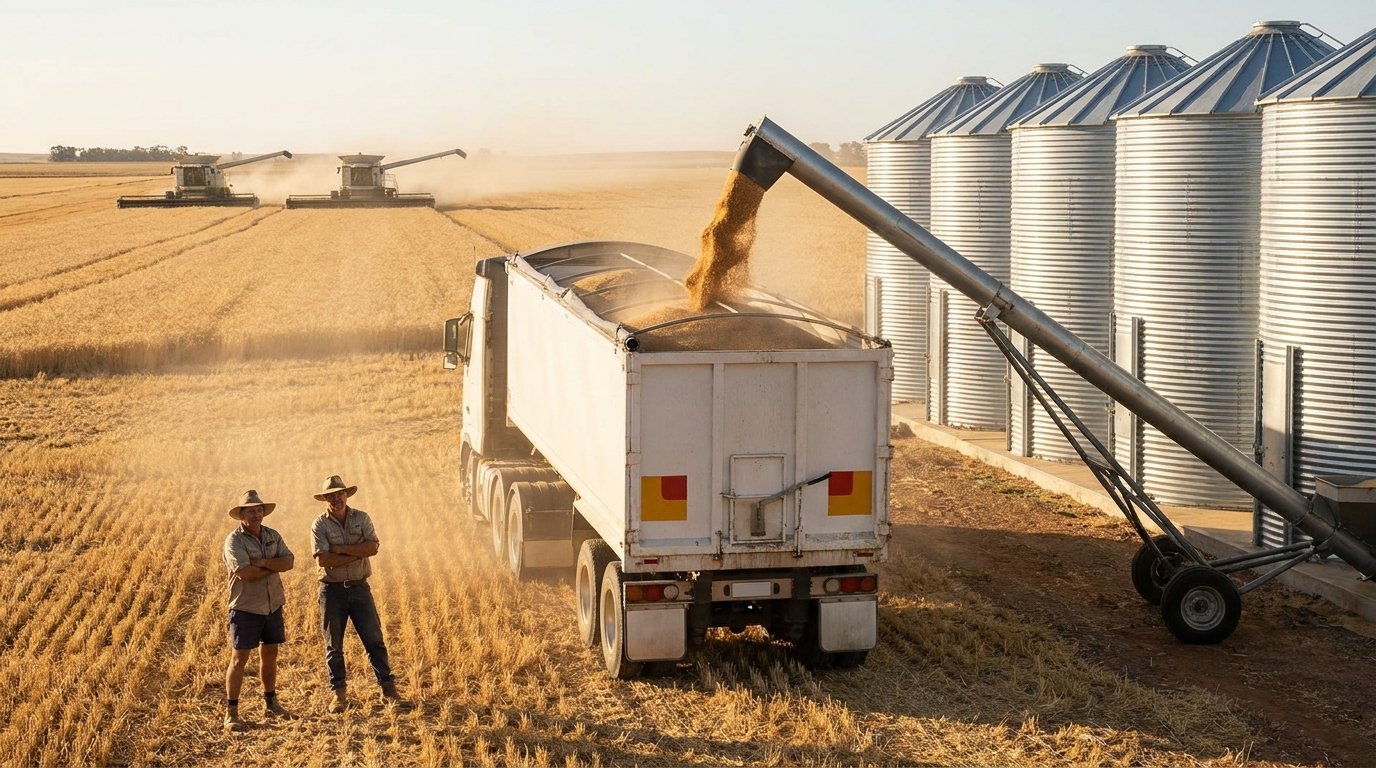
The harvest cheques are landing, and across South Australia, Victoria and southern New South Wales plenty of them are big ones. Before that money goes anywhere else, someone at the kitchen table asks: how much should I put into an FMD?
The ATO and your bank explain the farm management deposit (FMD) rules. None of them will give you the amount, and the amount is the hard part. It depends on three numbers that pull different ways: what the rules allow, what the deposit really saves in tax, and how much of this harvest you need before the next one is paid. Get the last one wrong and you are drawing the overdraft in August while your own money sits in an account you cannot touch.
Here is a five-step method for finding the number, worked through on an illustrative grain farm after a good 2026 harvest. It uses the current rules and Farming the Business, the GRDC manual I wrote.
Quick Answer
Put the smallest of three numbers into an FMD: your ceiling under the rules, the income worth moving to a later year for tax, and the cash you can do without for 12 months, through to next harvest in a poor season. In the worked example below, the cash number is the smallest by a long way.
- The rules set a ceiling, not a target. The deduction cannot exceed your taxable primary production income for the year, off-farm income must be $100,000 or less, and each individual can hold up to $800,000.
- Tax averaging shrinks the saving. In the example, a dollar deposited saves 30 to 35 cents this year, not the 47 cents the top bracket suggests, and most of that comes back when the money is withdrawn.
- The cash test decides it. An FMD is locked for 12 months, right through seeding and the winter trough, unless a drought or natural disaster exception applies.
About the detail here
FMD rules, the $100,000 off-farm income test and the $800,000 cap are as published by the ATO and the Department of Agriculture, Fisheries and Forestry, checked as at 12 November 2026. Tax figures use 2026-27 resident rates and the 2 per cent Medicare levy. FMD holdings are the department’s figures to 30 September 2026; the crop figure is ABARES’ September 2026 forecast. The worked example is illustrative and simplified: all income is from farming, both partners are in tax averaging, 2026-27 rates apply in every year, and GST, interest and the low income tax offset are left out. General information, not tax or financial advice: have your accountant run the averaging calculation on your own figures before you deposit.
Farm management deposit rules for 2026-27
A Farm Management Deposit lets an individual primary producer set aside pre-tax income in a good year and draw it in a poor one. The deposit is tax deductible in the year you make it, and the withdrawal is taxable income in the year you take it out. Every rule below bears on the amount.
| Rule | What it says | What it means for the amount |
|---|---|---|
| Who can hold one | Individuals carrying on a primary production business: sole traders, partners, and beneficiaries of a primary production trust. Not companies or trusts, and not jointly. | In a partnership each partner holds their own FMD and does their own sums. |
| Off-farm income test | Taxable non-primary production income of $100,000 or less in the year you deposit. | Over $100,000 and none of that year’s deposits are deductible. |
| Cap | No more than $800,000 in FMDs per individual, across all banks. | Your room is $800,000 less what you already hold. |
| Deduction limit | Deductions for the year cannot exceed your taxable primary production income for that year. | This year’s farm income is the hard ceiling. |
| Minimum amounts | Each deposit or withdrawal must be $1,000 or more, unless you withdraw the whole balance. | Rarely the constraint. |
| 12-month rule | Withdraw any part within 12 months and you lose the deduction on it, unless an exception applies (drought, natural disaster, bankruptcy, death, or ceasing to farm for 120 days or more). | Only deposit money you can do without for a full year. |
| Withdrawals | Assessable primary production income in the year withdrawn, and included in tax averaging. | The tax comes back. The question is at what rate. |
| Interest | Paid to you, not into the FMD; assessable, but not primary production income. | The FMD does not compound inside the account. |
| Security | An FMD cannot be used as security for a debt, though it can offset a farm loan where the bank offers it. | It will not help your borrowing limit in the trough. |
Summarised from the ATO’s farm management deposits scheme page and the department’s information for primary producers, as at November 2026.
Plenty of farmers use them. At 30 September 2026, primary producers held $6.24 billion in FMDs across 40,724 accounts, on the department’s statistics. Grain growers held $1.20 billion of that across 6,424 accounts, about $186,000 an account, and mixed grain, sheep and beef farms another $1.37 billion. One person can hold several accounts, so treat the average as a rough guide, not a benchmark.
What is the FMD tax benefit, really?
An FMD does not make tax disappear. It moves income, and the tax on it, from the year you deposit to the year you withdraw. The benefit comes from three things, and only the first is a permanent tax saving.
- The rate gap. If the income is taxed at a lower rate in the year it comes out, you keep the difference.
- The deferral. Tax paid a year or more later is cash you use in the meantime.
- The reserve. Money set aside in a good year is there for the poor one, and out of the trading account where it would otherwise get spent. That is the scheme’s stated purpose: building cash reserves for low-income years.
For 2026-27, an individual pays 45 cents on each dollar over $190,000, 37 cents from $135,001, 30 cents from $45,001 and 15 cents from $18,201, plus the 2 per cent Medicare levy. Outside tax averaging, each dollar deposited from the top of a $320,000 year saves 47 cents now. Withdraw it in a year taxed at 32 cents and you keep 15 cents of it for good.
Inside tax averaging, which applies automatically to primary producers unless they opt out, the sums change. Averaging is the tax system’s own smoother. Under income averaging for primary producers, the ATO averages your taxable income over the current year and up to four before it, and taxes the farming part of a big year closer to the average rate on that average income. In a year below your average, it charges extra tax the other way. An FMD and averaging do the same job, so when you use both, the FMD adds less. Step 2 puts numbers on it.
How much should I put into an FMD? Five steps
Here is the illustrative farm. A 2,500 hectare grain business in the southern cropping zone, run as a partnership of two partners sharing profit equally. The 2026 harvest is a good one, with most of it paid for by Christmas and $650,000 of grain still in storage to sell between January and May. Taxable income for 2026-27 is expected to be $640,000, or $320,000 each, all of it from farming. Over the four years before, each partner’s taxable income was $240,000, $180,000, $60,000 in a dry year, and $200,000. Each already holds $40,000 in an FMD from an earlier year, well past its 12 months.
Step 1: Work out your ceiling under the FMD rules
The ceiling is per person, so start with each individual who will deposit. Three checks:
- This year’s taxable primary production income. The deduction cannot exceed it. In the example that is $320,000 each.
- The off-farm income test. Each partner’s taxable non-primary production income has to be $100,000 or less. Rent, interest and wages from a second job all count. A spouse’s salary does not count against you; it only matters if the spouse is the one depositing.
- The cap. $800,000 less the $40,000 each already holds leaves $760,000 of room each.
So the rules would let this partnership deposit up to $640,000. That is a ceiling, not a recommendation, and it is a ceiling set by taxable income, which is not the same as money in the bank.
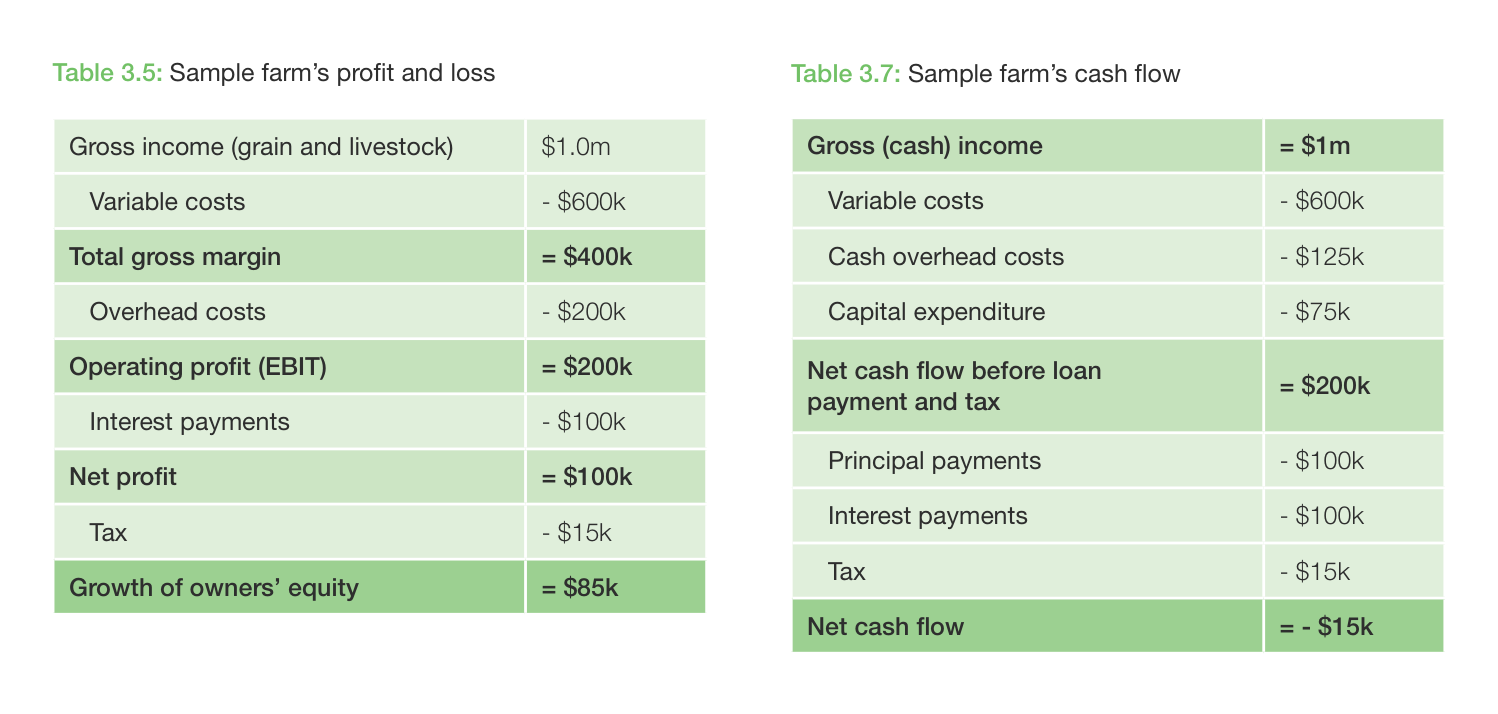
Taxable income tells you what the ATO will let you deposit. It does not tell you what you can afford to. The manual’s sample farm made $100,000 of profit in a year when, after principal, capital spending and tax, its bank account went backwards. Our piece on farm profit versus cash flow walks through that gap line by line.
Step 2: Work out what each dollar saves in tax, at your real rate
Now the tax. Here is what different deposits do to each partner’s 2026-27 tax bill, with averaging, and what the same deposits would save for someone outside averaging.
| Per partner, 2026-27 | No FMD | $50,000 | $100,000 | $150,000 | $200,000 |
|---|---|---|---|---|---|
| Taxable income | $320,000 | $270,000 | $220,000 | $170,000 | $120,000 |
| Five-year average income | $200,000 | $190,000 | $180,000 | $170,000 | $160,000 |
| Tax with averaging, incl. Medicare | $95,792 | $78,399 | $62,663 | $47,370 | $32,602 |
| Tax saved this year, with averaging | $17,393 | $33,129 | $48,422 | $63,190 | |
| Tax saved this year, not in averaging | $23,500 | $47,000 | $68,900 | $87,350 |
Illustrative, using 2026-27 resident rates and the 2 per cent Medicare levy, with all income from farming. The five-year average includes 2026-27 and the four years before it. At a $200,000 deposit, taxable income falls below the average and averaging adds $3,682 of extra tax back in the same year, which is already counted in the figure shown.
With averaging, each extra $50,000 saves between about $14,800 and $17,400 this year: 30 to 35 cents in the dollar, against 47 cents for the first $100,000 outside averaging. And once a deposit takes taxable income below the five-year average, here at about $150,000 each, averaging starts charging extra tax in the same year.
The bigger point is what happens when the money comes out. Say the next year is a poor one, with $60,000 of taxable income before the withdrawal, and the four after that are back at $200,000.
| $100,000 deposited, withdrawn the next year | In averaging | Not in averaging |
|---|---|---|
| Tax saved in 2026-27 | $33,129 | $47,000 |
| Extra tax in the year it comes out | $27,457 | $33,750 |
| Extra tax in 2031-32 | $2,460 | Nil |
| Net saving over six years | $3,212 | $13,250 |
Same illustrative partner, 2026-27 rates in every year and the Medicare levy at a flat 2 per cent. In averaging, tax from 2028-29 to 2030-31 is unchanged, because the deposit and the withdrawal both sit inside those five-year averages and cancel out. In 2031-32 the deposit year has dropped out of the average but the withdrawal year has not, so averaging charges $2,460 more. The result depends heavily on the income assumed in each of the six years: with a $320,000 year in 2031-32 instead of $200,000, the lasting saving falls to about $500.
In averaging, only about $3 of every $100 deposited is a lasting saving. The rest is deferral: $33,129 less tax this year, $27,457 of it paid back the year the money comes out and another $2,460 in 2031-32. That is still worth having, because it is money in your hands for a year and the reserve is real. But tax alone is a weak reason to deposit more than your cash can spare.
Your own result depends on your income pattern, any off-farm income, and whether you are in averaging at all: some farmers have opted out, which lasts ten years. This is not a back-of-the-envelope calculation. Ask your accountant to run it with and without the deposit, across the deposit year, the year you expect to withdraw and the years that follow. Our end of financial year tax planning guide covers the other levers they will put beside it.
Step 3: Map your cash to the low point before next harvest
This is the step that settles the number in the example, and the easiest to skip. Money in an FMD is locked for 12 months. A deposit made at Christmas is out of reach until next Christmas: through seeding, the winter, the spring and most of the next harvest. So the question is not how much is in the bank today. It is how low the balance goes before next year’s harvest is paid.
The manual makes the point with its sample farm, ‘Upndowns Farm’, whose cash flow runs from March to February.
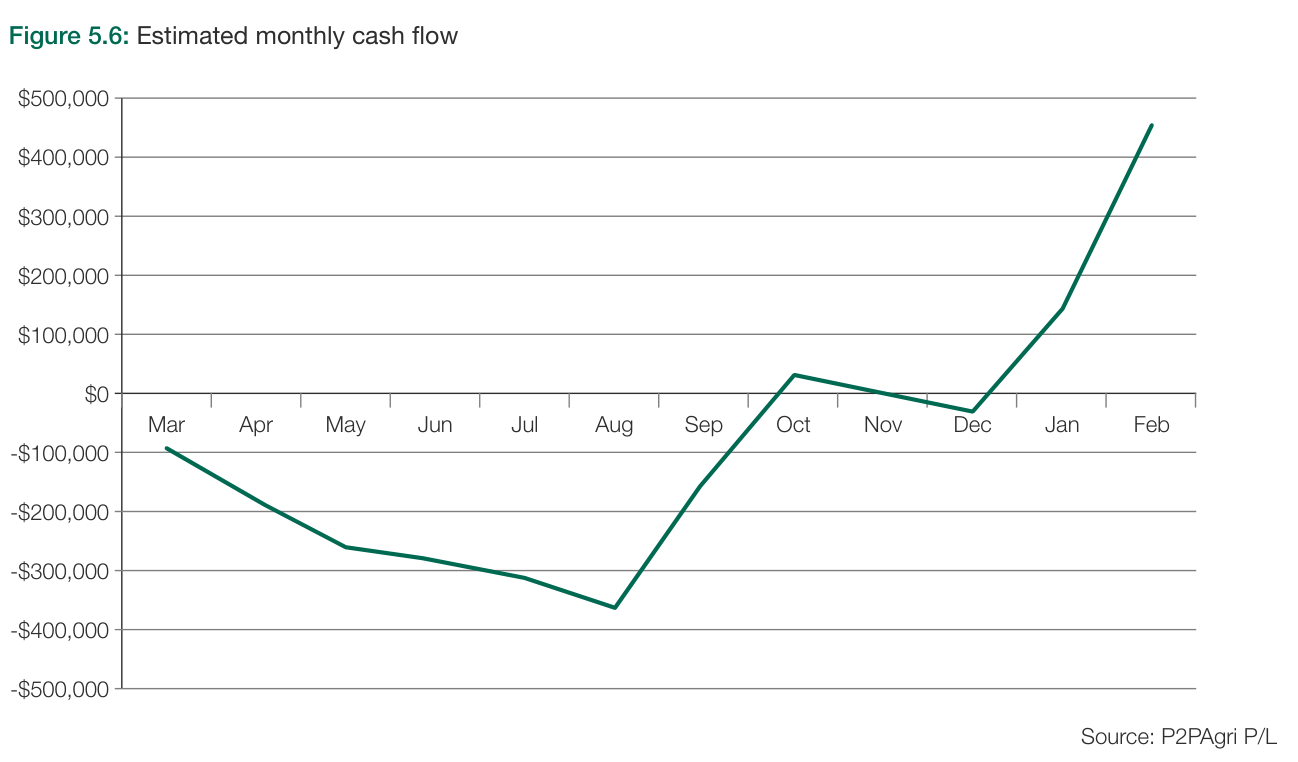
That $454,000 surplus looks like a lot to put away. But if next year runs the same way, $361,000 of it is gone by August. By my arithmetic, only about $93,000 could be locked up for 12 months without touching the overdraft, before any buffer and before tax, which the manual’s cash flow leaves out. As the manual puts it, cash flow management “is about keeping enough cash in your ‘bucket’ to meet the out-goings”.
Now the example farm. The table runs from 1 January to 31 October 2027, the last month before the next harvest is paid, for an average season and a poor one, because a deposit has to survive a bad year. Most of the 2027 crop’s inputs are committed before the season shows its hand, so the poor case differs mainly in what the stored grain sells for.
| Whole business, 1 Jan to 31 Oct 2027 | Average 2027 season | Poor 2027 season |
|---|---|---|
| Bank balance after harvest payments, 31 Dec 2026 | $1,050,000 | $1,050,000 |
| Grain still in storage, sold January to May | +$650,000 | +$552,500 |
| Inputs for the 2027 crop | -$800,000 | -$800,000 |
| Overheads and wages ($28,000 a month) | -$280,000 | -$280,000 |
| Family drawings ($10,000 a month) | -$100,000 | -$100,000 |
| Loan principal and interest | -$200,000 | -$200,000 |
| Income tax and PAYG instalments | -$150,000 | -$150,000 |
| Low point, 31 October 2027, before any new FMD | $170,000 | $72,500 |
Illustrative, excluding GST. The poor season prices the stored grain 15 per cent lower. It conservatively ignores the lower tax instalments a deposit would bring. In a poor season the 2027 harvest also pays less and later, so the balance recovers more slowly after October, while a deposit made now is still locked.
The rules say this partnership could deposit $640,000. Its cash says $170,000 in an average season and $72,500 in a poor one. Most of what the harvest put in the bank is already spoken for by the next crop. If you would rather fund part of the trough on the overdraft and deposit more, that is a choice with a price. Every extra $100,000 of overdraft drawn for five months costs about $3,540 in interest before tax at an illustrative 8.5 per cent. Against a lasting saving of about $3,200 per $100,000 in the averaging example, the interest takes most of it even after it is deducted, and it uses headroom you may want in a poor year. Our farm budget interest rate stress test shows how quickly a deeper overdraft and a poor season compound.
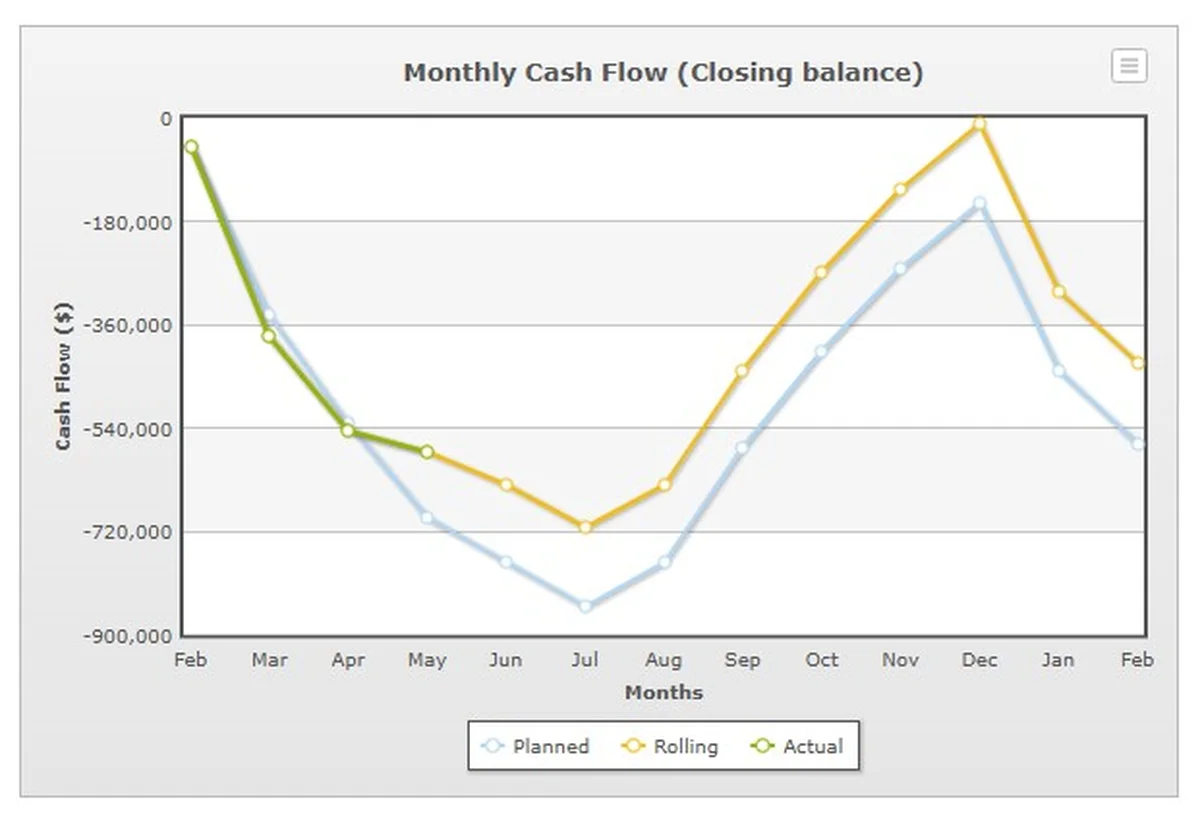
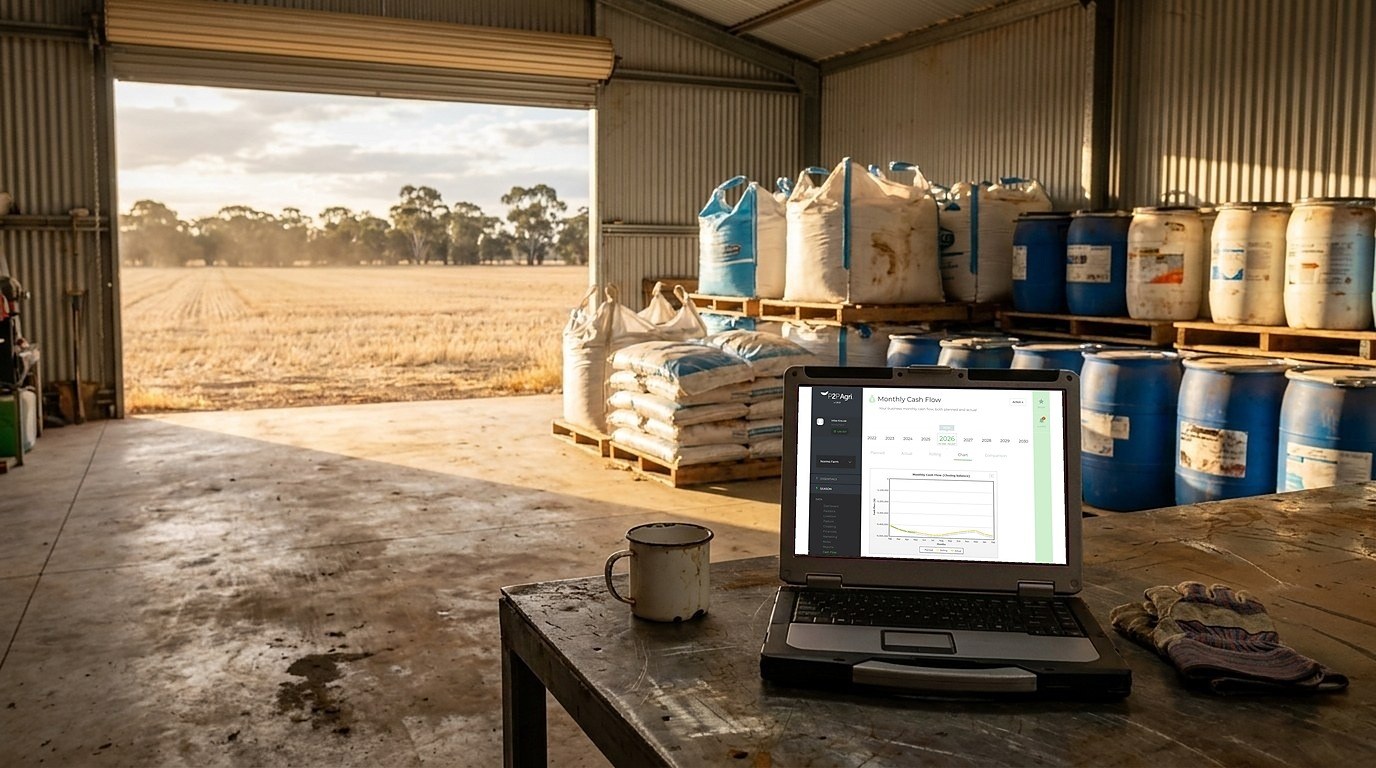
If you do not have a monthly cash flow to read the low point from, our guide to building a farm cash flow forecast sets one up in seven steps. In P2PAgri, the Season plan’s monthly cash flow budget draws the closing balance month by month, planned against actual, so the low point and its month are on the screen. As the actuals come in, the rolling projection moves the low point with them, so you see early whether this year’s deposit is going to pinch.
Step 4: Deposit the smallest number, and keep a buffer
Put the three numbers side by side.
| The three numbers | Example partnership | What it says |
|---|---|---|
| 1. Ceiling under the rules | $640,000 ($320,000 each) | The most the ATO will allow. |
| 2. Income worth moving for tax | Up to about $300,000 ($150,000 each) | Beyond that, income falls below the average and averaging adds tax back. Only 2 to 5 cents in the dollar is a lasting saving. |
| 3. Cash you can lock away for 12 months | $170,000 average season, $72,500 poor season | The number that binds. |
| Deposit now | $100,000 ($50,000 each) | Revisit before 30 June 2027. |
Why $100,000 and not $170,000? Because the deposit has to survive the poor season. With $100,000 in new FMDs, the low point is $70,000 in credit in an average year and $27,500 in overdraft in a poor one. The partners can carry that because of their buffer: the $40,000 each already holds in older FMDs. Those are past their 12 months, so they can come out in a bad year without losing the deduction, taxed in the year they are withdrawn. That lifts the poor-season low point to $52,500 in credit.
Depositing $50,000 each saves each partner $17,393 in 2026-27 tax, $34,786 for the business. Most of that is deferral, as Step 2 showed, but it is cash the partnership keeps through the trough.
How big a buffer? There is no rule. One month of outgoings, the depth of overdraft you are comfortable drawing, or older FMDs you can reach without penalty are all reasonable ways to set it. Decide it before the deposit, not in August.
Step 5: Split the deposit so you can reach it
How you hold the money matters almost as much as how much you hold.
- Each partner deposits their own. A partnership cannot hold an FMD and you cannot deposit jointly. Each partner has their own cap, off-farm income test and averaging.
- Two deposits beat one. You can hold several FMDs with several banks. In a middling year you can withdraw one and leave the other, rather than taking the lot into one year’s income.
- Ask about access after 12 months. An FMD can be at call or a term deposit. Ask what your bank pays, whether the account is at call once the 12 months are up, and what it charges to break a term. The tax exceptions do not stop a bank charging break fees.
- Ask about an offset. If your bank offers one against your farm loan, the deposit stops costing you the gap between the deposit rate and the loan rate. More below.
- Leave room to top up before 30 June 2027, once the grain is sold and the season has broken.
FMD after harvest: deposit now or before 30 June?
Any deposit made between now and 30 June 2027 counts for the 2026-27 year, so there is no tax reason to rush. There are cash reasons either way.
Depositing now gets the money out of the trading account before it is spent, starts any interest sooner and starts the 12 months sooner, so a December deposit is free again as the 2027 harvest is paid. And if your PAYG instalments are worked out on your instalment income, a deposit reduces that income for the period in which it is made.
Waiting until June means you know your 2026-27 taxable income, the grain in storage has been sold and priced, and the 2027 season has broken. The cost is that a June deposit stays locked until June 2028, through the 2027 harvest and into the next seeding.
The department’s figures suggest many farmers choose June. Holdings rose from $5.93 billion at the end of March 2026 to $7.04 billion at 30 June, then fell to $6.24 billion by 30 September. They fell by $0.92 billion and $1.05 billion in the same quarter of 2024 and 2025, and grain growers’ holdings fell 19 per cent between June and September this year. That is consistent with money going in at tax time and coming back out in the winter cash trough a year or so later.
There is a middle path: deposit part now, sized on the cash you will not need even in a poor season, and decide on the rest in June. Our post-harvest farm business review is the natural place to set the first number, and your grain marketing plan tells you when the stored grain will turn into cash.
Farm management deposit offset accounts against farm loans
If you farm as a sole trader or in partnership, you can use an FMD to offset a loan that relates wholly to your primary production business, provided your bank offers FMD offset accounts and you hold the loan and the FMD with the same bank. Not every lender does, and each sets up its own product.
Under an offset, the bank charges interest on the loan balance less the FMD balance. The FMD earns no assessable interest, and the interest you save is not deductible. The ATO’s own example: a $500,000 grain business loan offset by a $100,000 FMD is charged interest on $400,000.
For sizing, an offset changes the cost of holding an FMD, not the 12-month rule. Without one, the FMD earns a deposit rate while your farm debt costs a loan rate. With one, the FMD effectively saves you the loan rate and keeps its deduction. That makes a deposit cheaper to hold. It does not make locked money available in the trough.
Three cautions from the rules:
- The loan must be wholly for primary production. In the ATO’s example, a farmer offsetting against a header loan would breach the conditions, with penalties, by hiring the header out to neighbours. With a mixed-purpose loan, the offset can only run against the primary production part, and sub-accounts are the easy way to show that.
- Companies and trusts are out. A trust beneficiary can hold an FMD, but the offset needs the business run as a sole trader or partnership.
- There may be wider tax effects. The department notes an offset can reduce the interest deduction on the farm loan. Talk to your accountant first.
When to withdraw an FMD, and the drought and disaster exceptions
An FMD past its 12 months can be withdrawn at any time. The withdrawal is assessable primary production income in that year and goes into the averaging calculation, so the best year to withdraw is a low-income one, which is often also the year you need the cash. Avoid withdrawing into a strong year. And if you stop carrying on a primary production business for 120 days or more, your FMDs are treated as withdrawn anyway.
Inside 12 months you lose the deduction on what you take out, and may need to amend last year’s return. For a farmer who keeps farming, two exceptions keep the deduction:
- Natural disaster. You made and claimed the deposit in an earlier financial year, before the disaster, received a primary producer Category C recovery grant, and withdraw after that assistance is first provided.
- Severe rainfall deficiency. You made the deposit in the previous financial year, have held it at least six months, and an area of your farm has had rainfall in the lowest 5 per cent of records for the six consecutive months before you withdraw. The department’s FMD Rainfall Analyser shows whether you may be eligible, and the department issues a Rainfall Deficiency Report on request for your tax records.
Neither needs approval from the ATO or the department. Two catches: if you withdraw early under either exception, later deposits in the same financial year are not deductible, and because the drought exception needs a deposit from the previous financial year, money deposited this harvest could not come out under it before July 2027.
This year the season has split the country. ABARES’ September 2026 crop report forecast a 61 million tonne winter crop, the fourth largest on record, on excellent conditions in South Australia, Victoria and southern New South Wales, but poor conditions in northern New South Wales and Queensland. So the FMD question runs both ways this year: in the south, how much to put in; in parts of the north, whether last year’s deposits can come out early, where the rainfall test is the place to start.
The short version
The rules tell you the most you can put into an FMD. They do not tell you how much you should. That comes from three numbers: your ceiling under the rules, the income genuinely worth moving to a later year, and the cash you can do without for 12 months in a poor season. Deposit the smallest. In the worked example it is the cash, by a long way.
In the manual, Holbrook farmer Vicky Geddes put the case for good years well: “there is a huge risk in not maximising the really good years, those years you can really put some fat in the system.” An FMD is a good place to put that fat, as long as it is fat and not next season’s fertiliser.
If you do one thing before you sign the FMD form, find the lowest point in your bank balance between now and next harvest, in a poor season. Everything above it, less a buffer, is yours to lock away.
Keep reading
How to Stress-Test Your Farm Budget for Higher Interest Rates
Stress-test your farm budget for higher interest rates: what a half or full point rise does to term debt, overdraft and interest cover, with a worked example.
What Supplier Trade Credit Actually Costs You (Compared With an Overdraft)
What does supplier trade credit really cost compared with an overdraft? Work out the true rate on settlement discounts and price premiums for farm inputs.

Farm Lending After the Royal Commission with Matt O'Dea
Podcast: ex-agribusiness banker and broker Matt O'Dea on farm lending after the Royal Commission, hidden fees, brokers and choosing a bank that sticks.