
Grain Marketing Plan: When to Sell, Store or Forward Sell in Australia
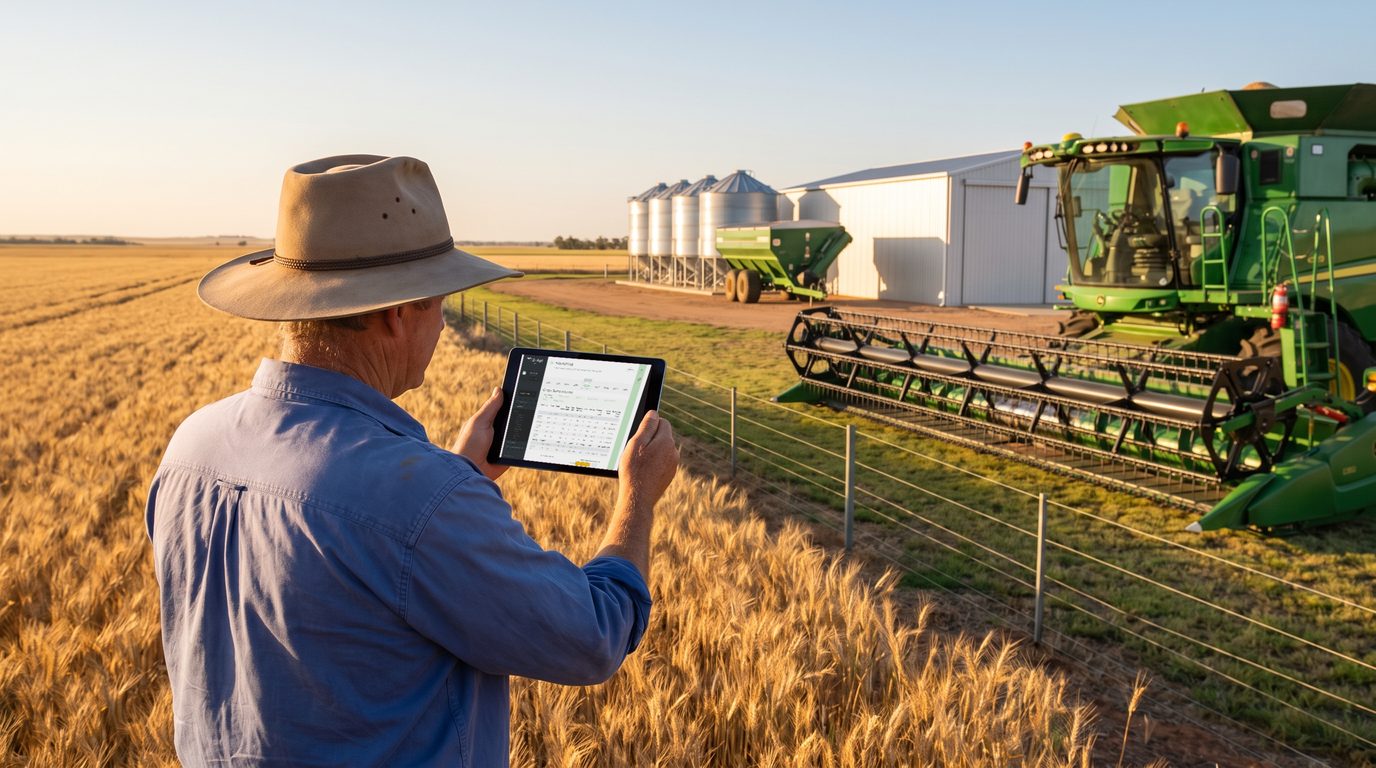
Every spring the same question arrives with the header. Sell it now, store it, or should more of it have been sold already? Many Australian growers answer it from the price board, one load at a time. A grain marketing plan answers it before harvest, from two numbers you can know in advance: your cost of production per tonne, and the month your cash flow needs the money.
The stakes are bigger than they look per tonne. On 3,000 tonnes of wheat, every $10 a tonne is $30,000. The expensive mistakes are forward selling tonnes you then fail to harvest, and storing grain without costing the wait. A written plan makes those calls once, calmly, instead of load by load from the header cab.
Search for a grain marketing plan template and much of what comes back is written for Minnesota, Michigan or Kansas, in bushels and around a marketing year that runs the other way. This guide builds the plan from the Australian end, with pools, bulk handler storage, track prices and a harvest in the middle of the financial year: seven steps, then a one-page template to fill in.
Quick Answer
A grain marketing plan sets out, before harvest, how many tonnes you will sell, by which method, at what minimum price, and in which month the money has to land. Build it from your cost of production and your monthly cash flow, then use the price board to execute it, not to write it.
- Target price is your cost of production per tonne plus your target margin per tonne, compared with bids netted back to the farm gate.
- Forward sell only against the tonnes you would still harvest in a poor season.
- Time the sales so enough money lands before the overdraft next peaks.
- Store only when the price rise you expect beats the carry: interest, storage fees and shrink. In the worked example below that is $21.60 a tonne to hold $300 grain for six months at 10 per cent interest.
What a grain marketing plan can control, and what it cannot
No marketing plan can set the price of your grain. In Farming the Business, the GRDC manual I wrote in 2015, I made a distinction worth repeating every harvest: most grain producers are sellers, not marketers. A ram stud markets: it promotes and presents its product, builds a reputation and sets its own price. A grower selling a bulk commodity has none of those levers. You are a price taker, and what you control is when you sell, who you sell to and which pricing mechanism you use.
That is price discovery, so a plan is not a price forecast. Section 8.3 of the manual breaks it into five things a good grain seller knows: how much they have to sell, their cost of production, the market, the choices available, and the risks of each. A marketing plan is those five written down before the season forces your hand: in the manual’s words, a way to separate the emotion from the logic of making a decision.
Keep the effort in proportion, though. The manual cites Dr Ross Kingwell, then of the WA Department of Agriculture, attributing about 70 per cent of the variation in farm profit to production and 30 per cent to price.
Harvest 2026: the numbers as at 24 September 2026
- A big crop in the south. ABARES’ September crop report put the winter crop at 61 million tonnes, the fourth largest on record and 12 per cent above its June forecast. South Australia, Victoria and southern New South Wales are excellent, Western Australia about average, northern New South Wales and Queensland poor.
- A thin margin anyway. ABARES forecasts average broadacre farm business profit for 2026-27 at $133,000, down 39 per cent in real terms from $219,000 in 2025-26.
- Harvest pressure is expected. Lachstock Consulting in Grain Central on 9 September: “With a large crop looming across SA and Victoria, growers will need every bit of storage and freight capacity available.”
- Prices in Grain Central’s 24 September market wire: wheat about $382 a tonne FIS Albany and $356 track Geelong, canola about $875 in the west and $815 in the east, barley about $325 FIS Albany.
- The cost of carrying grain. The RBA cash rate was 4.35 per cent, with financial markets and the major banks expecting a rise when the Reserve Bank announces its decision on 29 September. NAB’s published business overdraft benchmark rate was 10.72 per cent on 21 September. CBH’s 2026-27 wheat receival fee of $13.55 a tonne includes storage to 31 July; un-nominated grain then pays $2.35 a tonne a month.
These figures move daily. Everything outside this box is written to hold good from season to season.
Step 1: Work out your cost of production per tonne
Marketing starts at your cost sheet. Chapter 8 of the manual opens with it as a key point: know your cost of production to determine your target sale price. Without it, a bid is just a number. With it, a bid is a profit or a loss.
The formula
Cost of production ($/t) = (crop variable costs + the crop’s share of overhead and finance costs) ÷ tonnes for sale
The hard part is the overhead share, because there is no correct way to split rates, insurance, depreciation, interest and a managerial allowance between crops. Section 5.2.6 of the manual offers three bases: share of land, share of gross revenue, or share of whole-farm gross margin. Land is fine for a quick answer; gross revenue is the one the manual recommends for accuracy. Whichever you pick, use it every year so seasons can be compared.
Then work it out three times, because cost per tonne is mostly a yield question. Take an illustrative 1,000 hectares of wheat on a 2,000 hectare cropping farm: $480 a hectare of variable costs ($480,000) plus a 45 per cent share of $600,000 of whole-farm overhead and finance costs ($270,000), with seed and feed already taken out of the tonnes.
| Season | Yield | Tonnes for sale | Cost of production |
|---|---|---|---|
| Poor | 1.8 t/ha | 1,800 t | $416.67/t |
| Budget | 3.0 t/ha | 3,000 t | $250.00/t |
| Good | 3.6 t/ha | 3,600 t | $208.33/t |
Illustrative, excluding GST. Total costs of $750,000 are held constant, which slightly overstates the poor year because some costs, such as freight and in-crop nitrogen, fall with yield.
Same paddocks, same costs, and break-even doubles between a good year and a poor one. That range is the most useful thing to have in your head when a forward bid arrives in July. Our earlier piece on knowing your cost of production goes further into allocation, and a gross margin by paddock is where the variable cost line should come from.
Step 2: Set a target price from your budget
Cost of production is break-even. The manual is blunt that it carries no allowance for profit, so you also have to decide the margin you are aiming for.
The target price formula
Target price ($/t) = cost of production ($/t) + (the crop’s share of your target profit ÷ tonnes for sale)
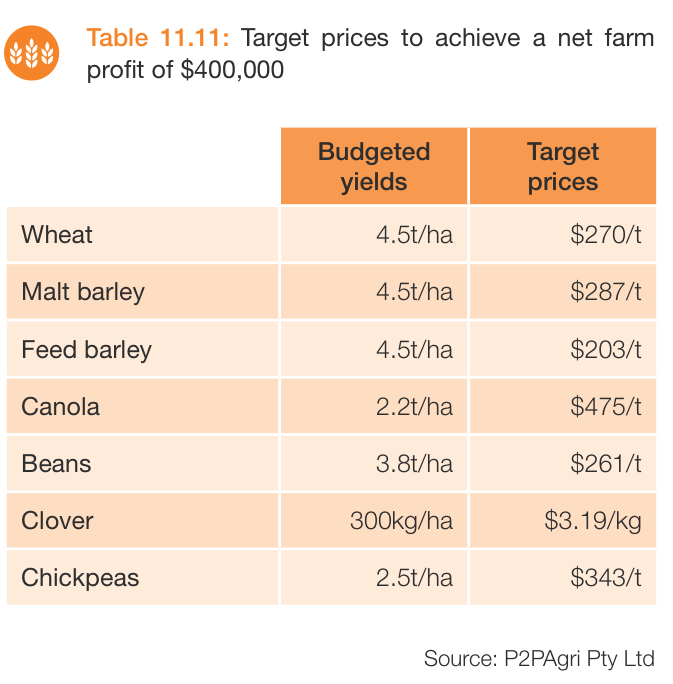
On the illustrative wheat: a $300,000 whole-farm profit target at the same 45 per cent share is $135,000, or $45 a tonne at budget yield. Target price = $250 + $45 = $295 a tonne at the farm gate. At the poor-year yield the same sums give $491.67, which is the point: in a poor year you will not hit the target, and the plan should not pretend otherwise.
Section 11.4 of the manual runs this across a whole farm, and our article on target price and target yield shows how to set both before the season.
Compare like with like: the net farm-gate price
Your target price is at the farm gate. Almost no bid is. Net each one back before comparing:
- Delivered prices are paid at the buyer’s door, a feedlot or mill. Take off your freight to get there.
- Free in store (FIS) prices are for grain already in a bulk handler’s site. Take off freight to the site and the receival fee. Where the FIS price is quoted for a port zone, as Western Australian prices often are (FIS Albany, for example), the handler’s site-to-port freight comes off as well.
- Track or port-zone prices are for grain in store in a port zone, and settle at your site after the Grain Trade Australia location differential is deducted. Take that off too. GTA is explicit that location differentials are not freight rates, so do not assume your freight bill is the same number.
- Every bid then loses levies and any end-point royalty, usually deducted from the payment.
Do the netting once for your usual sites and write the deductions down. Then judge the level as well as the net. The manual’s Table 8.1 ranked ten years of wheat prices into deciles (2003 to 2013). Those numbers are long dated, but ranking your own port zone’s last ten years the same way tells you whether today’s bid is a decile 3 or a decile 8, which is what a price trigger should answer.
Step 3: Choose how you will sell each tranche
The manual puts the selling window at roughly 24 months before harvest to 12 months after: three years of price movement to choose from, in three groups.
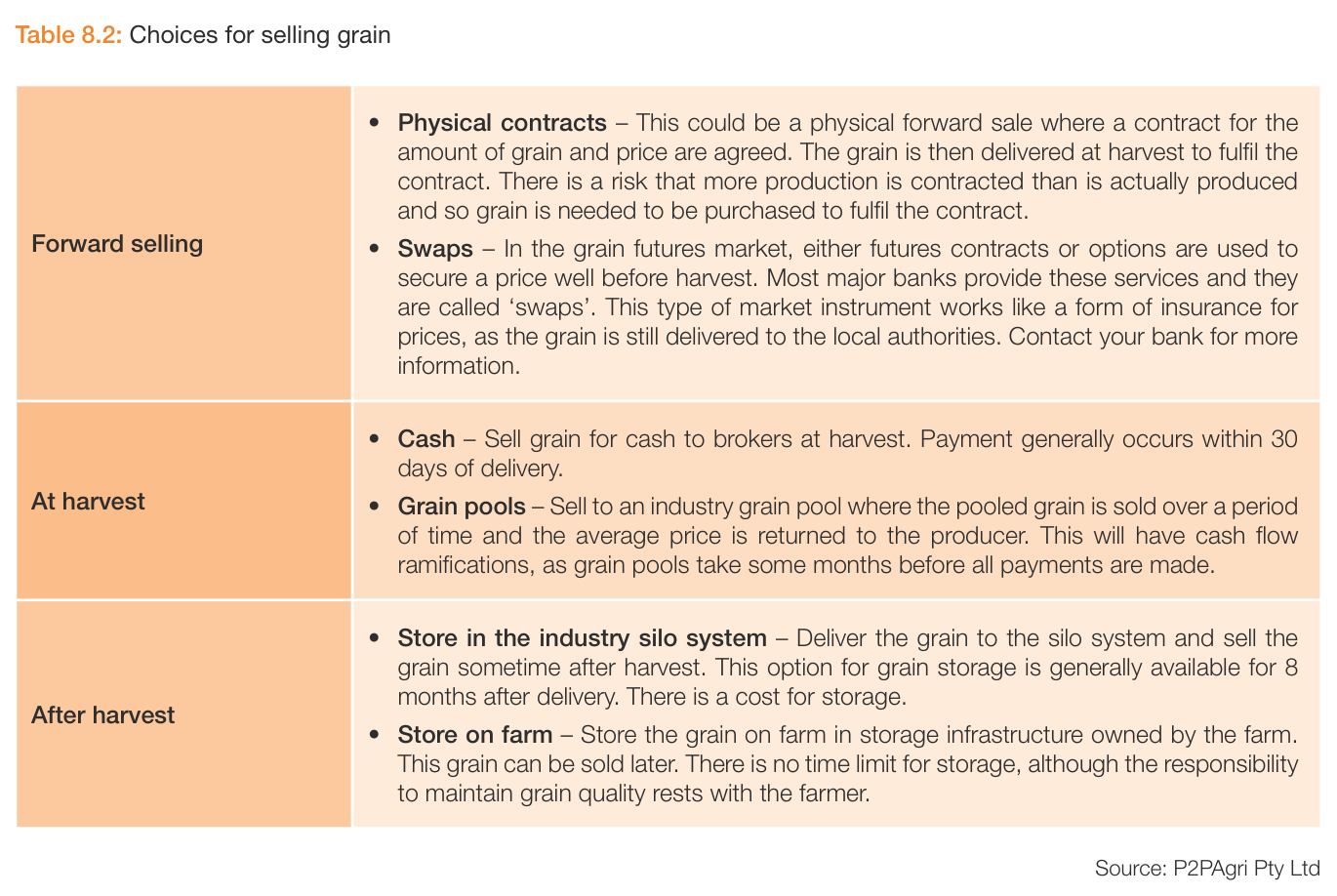
What a plan most needs is what that table leaves out: when each choice pays you, and what it costs if the season goes wrong.
| Method | Price fixed | Money lands | What can go wrong | Best for |
|---|---|---|---|---|
| Forward contract | At signing | After delivery, on the contract’s terms | Short of tonnes or grade: washout at market price | Tonnes you are sure of, above target |
| Swap or futures | At entry, as a price level | Gains or losses settle in cash; grain sold separately | A rising market can need cash before harvest | Price cover without promising tonnes |
| Cash at harvest | On the day | Days to weeks after delivery | Most grain sells at harvest, so prices may not be the best | Near-term cash needs |
| Pool | As the pool sells; you get the average less costs | Instalments; the final one can be more than a year out | Return unknown at delivery | Spreading price and income |
| Warehoused or on-farm storage | When you sell | After you sell | Price may not rise; interest, fees and quality risk | Grain where the carry pays, or local buyers |
Payment timing is set by each contract; cash contracts commonly pay a set number of days after the end of the week of delivery. The manual notes a pool can take up to 18 months to make its final payment. CBH, for one, offers pool payment methods from an advance within three business days of nomination to a deferred option first paying in the July after harvest.
Two risks cut across every row. Buyers can fail, so check a trader’s standing with your bank or farmer organisation before delivering on credit. And know before you sign what the contract says happens if the season stops you supplying the tonnes or the grade.
Swaps deserve a specific warning because they look like insurance and behave like cash. In May 2022 Farm Weekly reported Western Australian growers buying back wheat swaps at a loss before harvest. One had locked in $350 a tonne; with Chicago prices above $600 he had blown through his credit limit and had to buy back some of his swaps before he had any grain to sell at the higher price. A hedge can be the right tool and still create a cash call your overdraft has to carry.
Step 4: Decide how much to sell forward
Everybody wants a percentage, and there is no correct one. The manual is clearer about the risk than the number. It records a year when growers new to forward contracts were hit by a dry spring, came up short, and had to buy grain into a rising harvest market to fill their contracts, at a cost to some of more than $100,000. When they thought they were managing risk, they had increased it. Yield risk matters as well as price risk.
So size it against yield. A conservative way is to commit physical forward sales only against the tonnes you would still harvest in a poor season, and commit more of those tonnes as the crop becomes certain. On the illustrative wheat, poor-year tonnage is 1,800 tonnes, 60 per cent of budget.
| Stage of season | What you know | Illustrative forward ceiling |
|---|---|---|
| Before sowing | Stored moisture and the outlook | A third of poor-year tonnes: 600 t, 20% of budget |
| Established, winter | Area sown, establishment, rainfall to date | Half of poor-year tonnes: 900 t, 30% |
| Late spring, grain fill | Most of the yield made; frost and heat risk remain | Up to poor-year tonnes: 1,800 t, 60% |
A ceiling, not a target. Only commit when the net farm-gate price clears your cost of production, and ideally your target price.
The cost of getting it wrong can be worked out in advance. Say the farm had committed 2,400 tonnes off its average yield and harvested 1,800. The 600-tonne shortfall is typically washed out at the difference between the contract price and the market price when the shortfall is settled. If a dry spring across the district has pushed local prices $60 a tonne above the contract, that is $36,000 leaving the account in the one month you planned to be flush. Poor local seasons and firmer local prices can arrive together, as they did in the manual’s dry-spring example, which is why this bites.
Growers in the manual’s case studies land in different places. Steve and Lhot Martin at Minlaton split the crop into quarters: futures and swaps, physical contracts, harvest and post-harvest. Brian Gregg at Emerald forward sells about half and sells the rest after harvest against simple price triggers. The manual also describes a 33:33:33 split between forward, harvest and stored, and a 50:50 split between forward and stored with nothing sold at harvest, when most of Australia’s grain is sold. None is the right answer. They are rules that stop the decision being made in a panic, and they mean no single day’s price, good or bad, decides your year.
The honest limits: in a drought-prone northern district poor-year tonnage can be close to zero, and the answer also depends on storage, on whether your equity can fund a washout, and on whether the forward price clears your target at all. If it does not, the ceiling does not matter.
Step 5: Decide whether to sell at harvest or store
Storing grain is a bet that the price will rise by more than it costs to wait. That cost, the carry, can be worked out to the dollar before you place the bet.
The carry formula
Carry ($/t) = (net harvest price × interest rate × months stored ÷ 12) + storage, handling and treatment fees + (net harvest price × shrink %)
Store only if the net price you can reasonably expect later, minus the net price at harvest, is bigger than the carry.
GRDC’s Economics of On-Farm Grain Storage guide costs interest and shrink on stored grain the same way. Here it is on 500 tonnes of illustrative wheat held six months.
| Carry item | How it is worked out | Per tonne |
|---|---|---|
| Interest | $300 × 10% × 6 ÷ 12 | $15.00 |
| Storage, handling and treatment | Illustrative; use your handler’s schedule or on-farm costs | $6.00 |
| Shrink | $300 × 0.2% | $0.60 |
| Total carry | $10,800 on 500 tonnes | $21.60 |
Illustrative: $300 a tonne net farm-gate harvest price, 10 per cent interest, six months. The stored grain must sell for at least $321.60 net, a 7.2 per cent rise, before storing makes a cent. Each extra month adds $2.50 a tonne of interest plus any monthly storage fee.
Is a 7.2 per cent rise likely? The GRDC guide, published in 2013, cites Ag Concepts Unlimited research finding that over the previous 14 years CME wheat futures had on average peaked in September about 10 per cent above the December harvest price. On $300 grain that is $30, but December to September is nine months, not six: nine months of interest alone at 10 per cent is $22.50 a tonne before any storage or shrink. It is also an average, a Chicago futures price rather than your port zone, and it assumes you sell at the peak.
Storing the whole crop as routine is a thin bet. Storing a tranche with a written price target and a sell-by date is a plan.
The interest rate is the part people get wrong
Use the rate your money actually costs or earns. If selling at harvest would pay down an overdraft, the carry uses the overdraft rate and it is a real cash cost. If the proceeds would sit on deposit, use the deposit rate, which is much lower. The same 500 tonnes can be worth storing for a neighbour with money in the bank and not for you with a drawn overdraft.
It is also why rate rises matter to marketing: every increase makes waiting dearer for anyone in debt.
The GRDC guide also puts a dollar value on the other reasons to store: keeping the header running, cheaper freight after the rush, local buyers such as feedlots, and blending. And if you want a later price rather than the grain itself, selling at harvest and holding a swap avoids storage and shrink, at the cost of the cash-call risk above.
Step 6: Time your sales against peak debt and the tax year
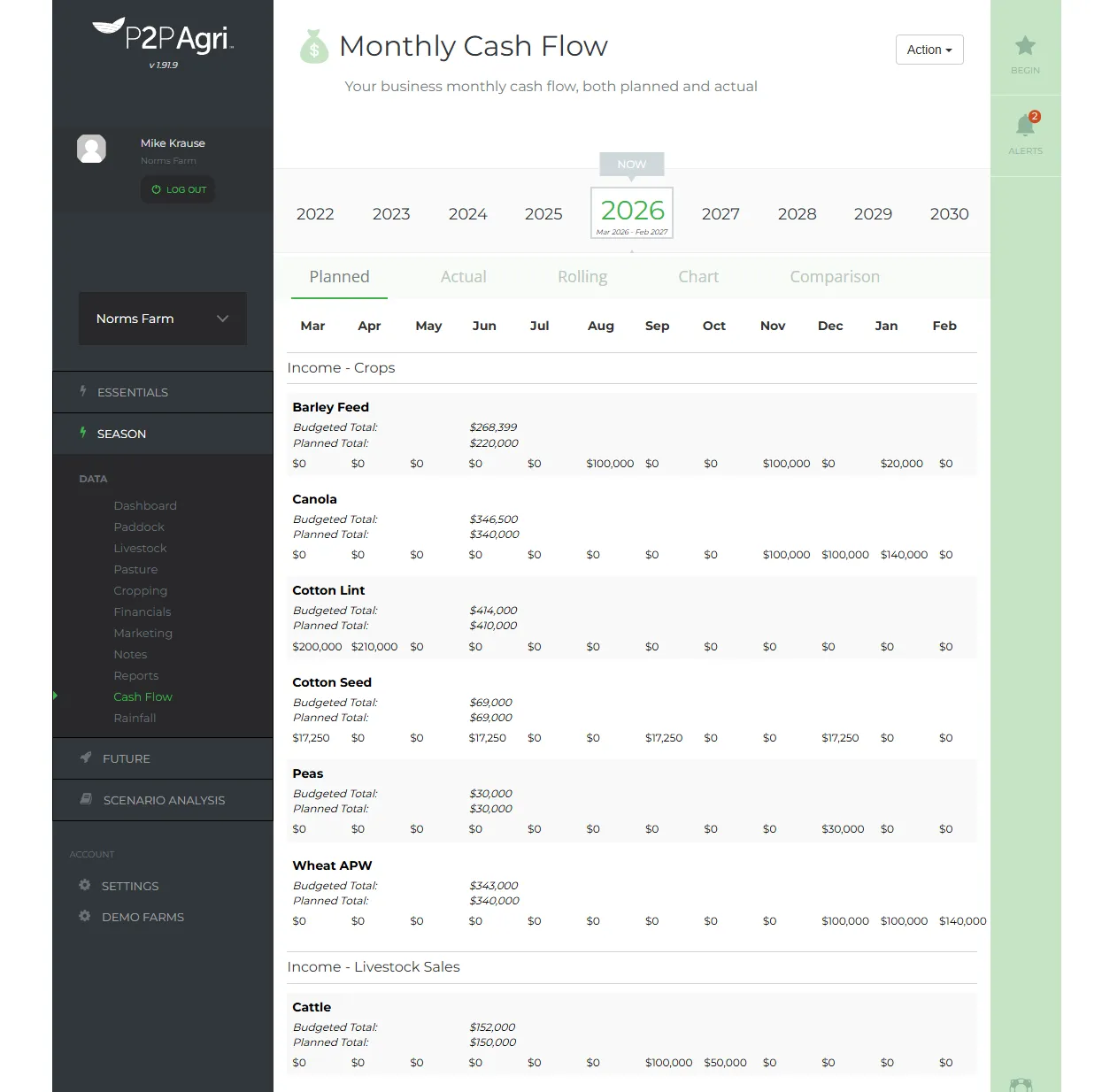
Marketing and cash flow are the same plan, written in two places. The manual makes the link directly: selling decisions “are also made depending on the cash flow needs of the business.” Your monthly cash flow forecast shows the month the overdraft peaks, which for many winter croppers falls between the autumn input bill and harvest.
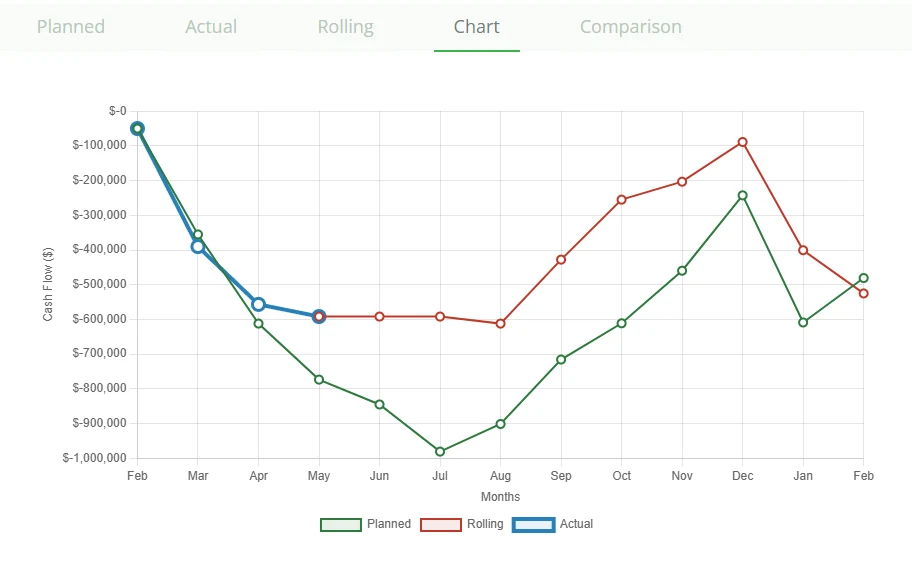
So the plan must deliver money in particular months, not just a good average price. Put every tranche in the cash flow in the month the money lands:
| Tranche | Tonnes | Price fixed | Money lands |
|---|---|---|---|
| Forward contracts | 900 t | Winter and spring | December |
| Cash at harvest | 750 t | At delivery | December and January |
| Pool | 750 t | Progressively | Instalments through the next year, by payment option |
| Stored | 600 t | March to May, on a trigger | April to June, before the input bill |
Illustrative split of 3,000 tonnes for a southern winter cropping business. Harvest timing and payment terms vary by region and contract.
Look at the last row. If the stored grain pays for next season’s fertiliser, it is not a speculative position. It is working capital with a price attached, and its sell-by date is the month the input invoices fall due.
If you plan to carry inputs on supplier terms instead, our comparison of trade credit and the overdraft costs that choice, and our piece on profit versus cash flow explains why one year can look comfortable on one and tight on the other.
Selling stored grain before or after 30 June
The financial year cuts straight through the marketing year, and whether stored grain is sold in June or July can move it between income years. Before you use that:
- When a sale counts depends on your accounting basis. The ATO’s ruling on the old AWB arrangements, TR 2001/1, treated a cash sale as income in the year the grain was sold for accruals-basis growers and in the year of payment for cash-basis growers, and the drawing amounts AWB paid at harvest under its pool agreements as loans, not income. Whether a current contract is treated the same way depends on its terms.
- Unsold grain still counts. Grain you own at 30 June is generally trading stock, valued at cost, market selling value or replacement value. The method decides how much of its value counts this year, so holding grain over 30 June is not automatically a deferral.
- There is a purpose-built smoothing tool. For eligible primary producers, Farm Management Deposits move income between years without the storage costs, shrink and price risk of carrying grain; our end of financial year guide covers them.
Take four questions to your accountant before June: are we on a cash or accruals basis for grain income, how will grain on hand at 30 June be valued, how is our pool’s harvest payment treated, and would an FMD do the smoothing better? This is general information, not tax advice.
Step 7: Put it on one page with a grain marketing plan template
The manual’s first action point for grain selling is to make a considered decision at the start of the season on how you will sell, and develop a grain selling plan. Here is the one-page version, with the illustrative wheat filled in and a column for your own figures.
| Line | Illustrative wheat | Your figures |
|---|---|---|
| Tonnes for sale: poor / budget / good | 1,800 / 3,000 / 3,600 t | |
| Cost of production: poor / budget / good | $416.67 / $250.00 / $208.33 | |
| Target price at budget yield (net farm gate) | $295/t | |
| Floor for discretionary sales | $250/t, budget cost of production | |
| Deductions to net back each usual bid | Freight, receival, levies, royalty, location differential or port freight | |
| Forward ceiling by stage | 600 t pre-sowing, 900 t winter, 1,800 t late spring | |
| Split by method | 900 forward, 750 cash, 750 pool, 600 stored | |
| Price triggers | Sell the next 300 t whenever the net price reaches $295 | |
| Peak debt month and cash needed by then | From the cash flow forecast | |
| Stored grain: carry break-even and sell-by date | $21.60/t for six months; sold by the month inputs fall due | |
| Which side of 30 June | Agreed with the accountant by May | |
| Buyer and contract checks | Payment terms, washout clause, buyer’s standing | |
| Review dates | Monthly, plus sowing, end of winter, start of harvest | |
| End of season scorecard | Average net price achieved against target and against the harvest cash price |
The last line matters most. The manual’s final action point is to monitor your grain selling performance each season, and the scorecard belongs in your post-harvest business review. If you pay a grain selling adviser, this page is the brief you give them, and the scorecard is how you tell whether the fee paid for itself.
Keeping the plan and the cash flow together
A spreadsheet can hold all of this, and for some growers that is enough. The difficulty is keeping it connected, because a forward contract signed in August changes the December cash flow. That connection is what P2PAgri’s Season plan is built around:
- Crop marketing records each sale’s buyer, price, tonnes, delivery and commission, plus unsold and retained grain, and shows your average price across the sales.
- Monthly cash flow planning puts each tranche’s income in the month it lands, so you can see whether the peak debt month is covered before it arrives.
- Since the August 2026 release, grain carried over from last season gets its own line in the new season’s cash flow.
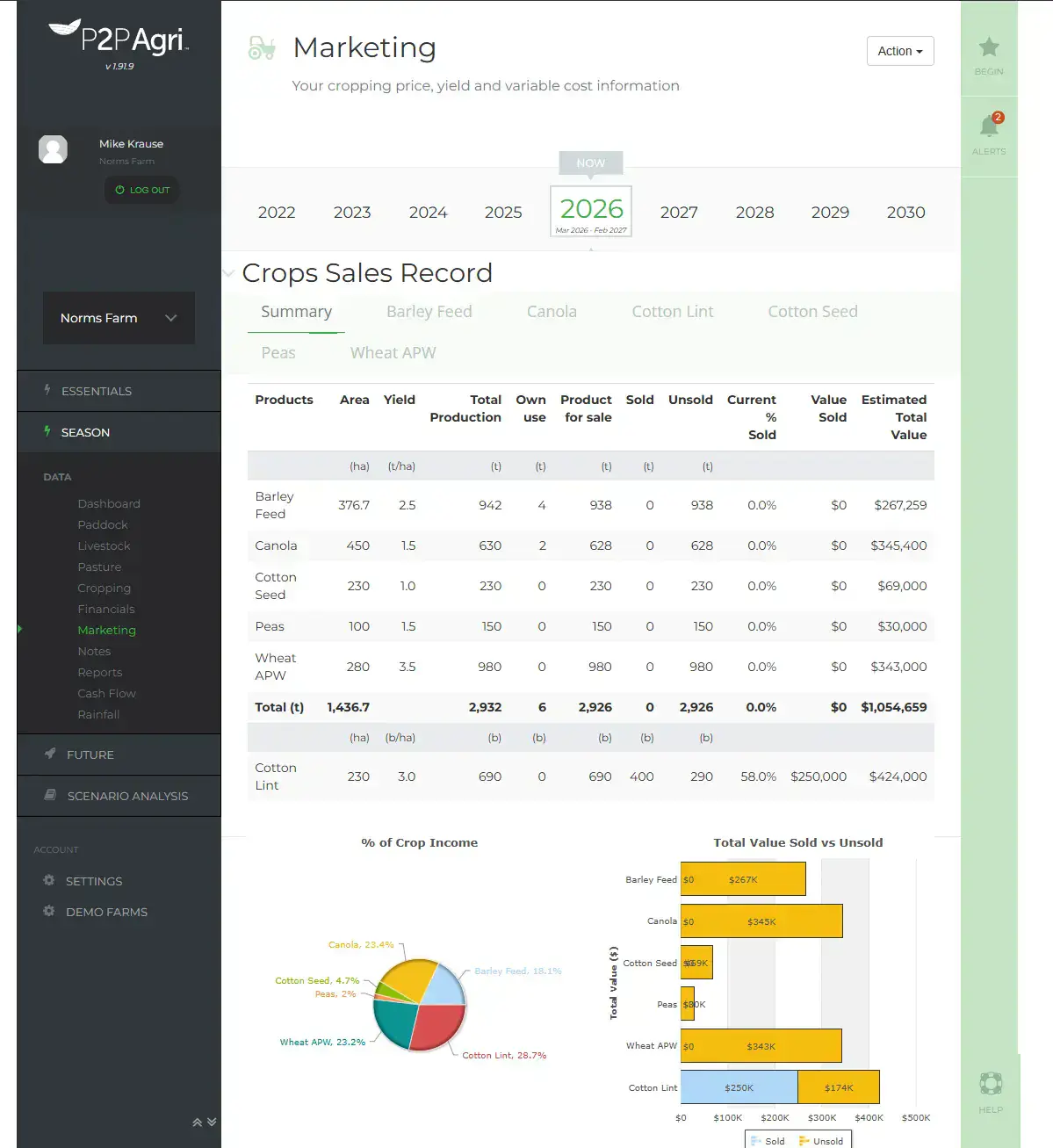
Marketing planning and monthly cash flow are in the paid Season plan. The free Essentials plan builds the Management P&L, balance sheet and bank ratios from your Xero or MYOB data, a sensible place to find the whole-farm overhead and finance costs that Step 1 shares between crops.
The short version
You cannot set the price of your grain. You can decide when you sell, who to and how, and whether that makes money depends on two numbers you can know before harvest: what a tonne costs you to grow, and the month you need the money. Work out cost of production at three yields, add your margin to get a target price, and compare bids netted back to the farm gate. Forward sell against poor-year tonnes. Store only when the carry is covered. Put every tranche in the cash flow in the month it is paid, settle the 30 June question early, and score the season against your own target, not the best price anybody heard of at the pub.