
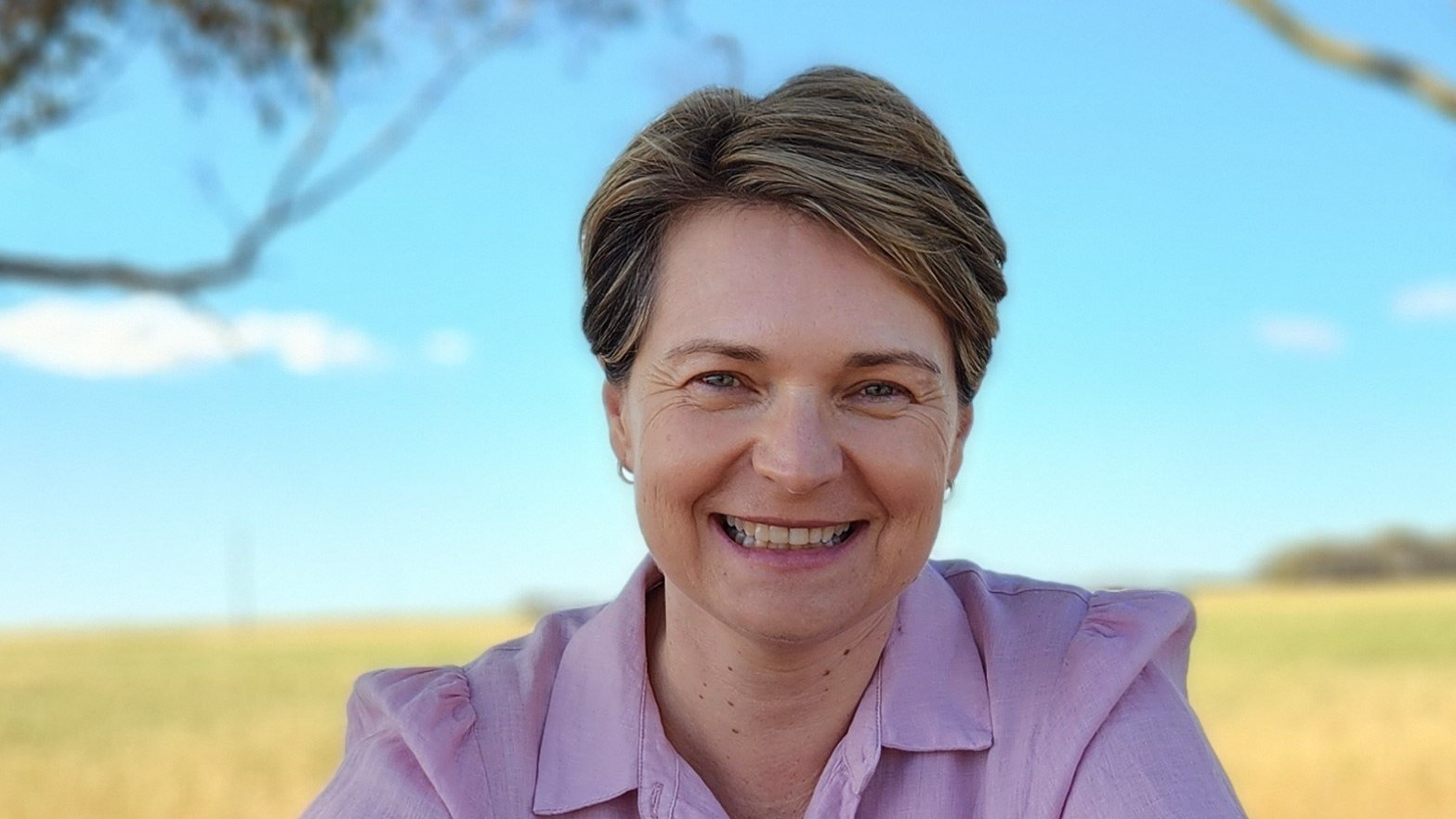
When Lisa Jeitz needs to make a big call on the family cropping business, she no longer blocks out two weeks at the desk. She sets aside an afternoon.
Lisa and her husband Kirk farm at Pinehills Pastoral Co, their family grain business at Cascade, out of Esperance on the south coast of Western Australia. The country runs from about 30 to 90 kilometres from the coast across a real mix of soils, from deep sandy rises and gravel over clay to sticky alkaline grey clays and a few prized patches of red loam. On roughly 425 millimetres of average annual rainfall they crop wall to wall, and for the last six or seven years the rotation has sat close to 50-50 wheat and canola.
Lisa is the one who runs the numbers, and she is meticulous about it. What changed when she added P2PAgri's scenario analysis to her toolkit was not the rigour. It was the time it took, and how quickly she could act when a decision would not wait.
At a glance
- Farmer: Lisa Jeitz, Pinehills Pastoral Co
- Location: Cascade, near Esperance, Western Australia
- Enterprise: 100 per cent cropping, wheat and canola, about 425mm average rainfall
- Tools: Xero for accounts, P2PAgri for budgeting, scenarios and bank reporting
- Result: five or six fully graphed scenarios in a day, work that used to take up to two weeks
The $1,600 a year is nothing compared to the quality of decisions you can make with the information you create from it.
Lisa Jeitz, Pinehills Pastoral Co
The challenge: rigorous numbers, at a heavy cost in time
Long before P2PAgri, Lisa had built serious financial discipline into the business. She used Agrimaster for budgeting for years, and alongside it kept an Excel workbook of about 20 tabs where she did her own scenario analysis, KPIs and bank ratios.
“That was taking me a really long time, but I do really like it and find it super valuable, and I want to keep track of it over time,” she says.
She had also moved the business across to Xero, a deliberate choice for its more up to date features and, importantly, its audit trail. With an office assistant, family members, a consultant and a bookkeeper all potentially touching the books, being able to see who changed what and when mattered to her.
The problem was not rigour. It was time, and speed when it counted. Building five or six genuinely comparable scenarios in a spreadsheet, then charting them so others could follow the logic, could swallow two weeks. A farm's biggest decisions rarely wait two weeks.
Before she settled on P2PAgri, Lisa did her homework. She looked at Figured, the budgeting add-on for Xero, and found it was not featured enough for the depth of budgeting she does. She looked at Cash Peak by Aglytica, which did not suit her needs at the time. Then she looked at how P2PAgri compared.
The solution: scenario planning she can keep up with
What sold Lisa was not that P2PAgri does everything. It was that it does the hard part, the analysis, better than anything else she had tried, and fast enough to keep pace with real decisions.
“Where it lacks in one area, it exceeds in the analysis and the ratios,” she says. “I absolutely love the graphing over time of my rolling balance, month by month. And if you've got scenarios, you see them all compared to each other on the one graph, month by month, so you can track what your finance is going to look like. It is very visual. It helped Kirk and me both see very quickly which scenario was going to be best.”
Her workflow now runs like this:
- Start free. At the Essentials level, Lisa enters about 20 figures straight off her tax returns, something she has now done for seven or eight years. In an hour at most she gets the trend graphs and the key ratios a bank looks at in a review.
- Build the season budget. In season she builds her budget, and the gross margins it produces are a favourite part. Because she runs Xero, she pulls her actuals in to update the budget every month or two.
- Track the cash. She leans on the month by month cash flow graphs to see her rolling balance and available finance across the year.
- Run scenarios when it counts. She saves the heavy scenario work for the big projects: a land purchase, the fertiliser decision, a machinery choice, or this season's move to 80 per cent canola.
- Report to the bank and the family. She sends her budget to the bank as a report each year, saving the graphs to PDF and building them into the presentation, exactly as a consultant would.
“The feedback from my bank manager is that he just likes reading my reports,” she says. “They are very readable. He gets the whole picture really quickly.”
The results: an afternoon instead of a fortnight
The headline is time, and what that time is worth.
“I compared scenarios in a more robust and thorough way in one day than would have taken me two weeks at the desk on my own,” Lisa says. “In half a day sitting with P2PAgri, I can get five or six scenarios and have them all graphed up beautifully, ready to present to my stakeholders.”
That speed changes the quality of the decision, not just the effort behind it.
“Kirk and I were spitballing, going, hang on, because you can do it quickly. What if we try this? What if we try that? We felt we had made a decision based on much more robust considerations than we would have in the past.”
It also changes what is possible when the clock is running. When a neighbouring block comes up there is rarely time to join a consultant's queue and wait for the numbers to come back. Modelling it herself, in her own timeframe, let Lisa and Kirk decide quickly either way.
This season's move to 80 per cent canola is a good example. Facing volatile fuel and fertiliser prices, they modelled the switch rather than guessed.
“It showed really clearly that we can grow better canola with less nitrogen than wheat,” Lisa says. “You can't do it all the time, we really do need a rotation, but for a once-off managed response to an event, we took that risk.”
On the numbers, Lisa is blunt about the value. She pays $135 a month, which she rounds to about $1,600 a year.
“Some people might think, gosh, that seems a lot. But the amount of scenarios I have put through would probably cost me $10,000 to ask my consultant to do as a separate exercise. A good decision could save you millions or make you millions. The $1,600 a year is nothing compared to the quality of decisions you can make with the information you create from it. It is an easy investment decision to make.”
What surprised her: the graphs got the family talking
The thing Lisa did not see coming was how much the reporting would do for the conversations around the kitchen table.
“I didn't expect the graphs to be as useful, or as easy to prepare. And I didn't think my husband and my parents would like them as much as they do,” she says. “It is visual, so it let them grasp what I had calculated very quickly, and then it stimulated conversation, new ideas and alternative options.”
She contrasts it with the old rhythm of budget day with a consultant: a full day of being asked how many of this and how much of that, a printout at 5pm, and everyone too exhausted to think, right when the good conversation should start.
“This lets you get that done relatively quickly,” she says, “so you get to the good conversation and the big picture.”
Her advice to other farmers
“It does take a little learning to put the right information in,” Lisa says. “But Mike is very available and supportive, and a great teacher. Now that I have put the time in, it is a no-brainer to run a scenario whenever I have a thought in my mind.”
She is also candid that no single tool does everything, and she does not think it should have to. She still values what Agrimaster and Xero each do well, and she is happy to run more than one tool.
“Does any farm have one tractor and one truck? They need multiples. Everything has a purpose. So why should software be any different?”
About Lisa and Pinehills Pastoral Co
Lisa and Kirk farm at Pinehills Pastoral Co, a family grain business near Esperance in South East Western Australia that has grown wheat, canola and other grains for the export market since 1967.
Frequently asked questions
Does P2PAgri work with Xero?
Yes. Lisa Jeitz runs her farm accounts in Xero and draws her actuals into P2PAgri to update her budget each month. You do not have to use Xero either, because P2PAgri can import figures from other accounting software as well.
How much time can farm scenario planning software save?
In this case study, work that took up to two weeks in a spreadsheet took Lisa about half a day to a day in P2PAgri. In that time she can build and graph five or six budget scenarios ready to present to her bank and family.
How much does P2PAgri cost?
P2PAgri has a free Essentials plan that turns a few figures from your tax return into the key ratios a bank looks at in a review. Paid plans add budgeting and scenario analysis. Lisa is on a plan at $135 a month. See the pricing page for current plans.
What can farmers use P2PAgri scenarios for?
Lisa uses scenarios for the big decisions: whether to buy a neighbouring block, how to respond to a fertiliser price shock, comparing machinery options, and this season's move to 80 per cent canola.