
Iran Fuel Crisis and Australian Farm Costs: What the Numbers Actually Show
The Strait of Hormuz Crisis: What It Means for Australian Agriculture
The coordinated US and Israeli strikes on Iran in late February 2026 have triggered the most significant fuel supply disruption Australia has faced in decades. With Iran's Revolutionary Guard Corps effectively shutting the Strait of Hormuz—a chokepoint that normally carries around one fifth of global oil and gas supply—Australian farmers are confronting both immediate supply shortages and rapidly escalating costs.
Diesel prices have already surged past 225 cents per litre, up from around 175c/L before the conflict began. Regional areas are being hit hardest, with some farmers in Western Australia reporting that diesel deliveries have been halted entirely, with some told supply may not resume for weeks. In parts of NSW and Queensland, farmers are receiving only partial orders or being turned away at regional bowsers.
The timing could not be worse. With autumn planting season approaching, grain farmers across the country need to finalise their fuel and fertiliser supplies. A missed sowing window doesn't just delay production—it directly translates into lower yields, reduced farm income, and potentially higher food prices for all Australians.
Fuel Is Critical—But It's Not the Largest Cost on Most Farms
The fuel crisis is understandably dominating headlines and farm conversations right now. However, there is an important distinction that experienced farm business managers understand: the immediate challenge is fuel availability, not necessarily fuel cost as a proportion of the total farm budget.
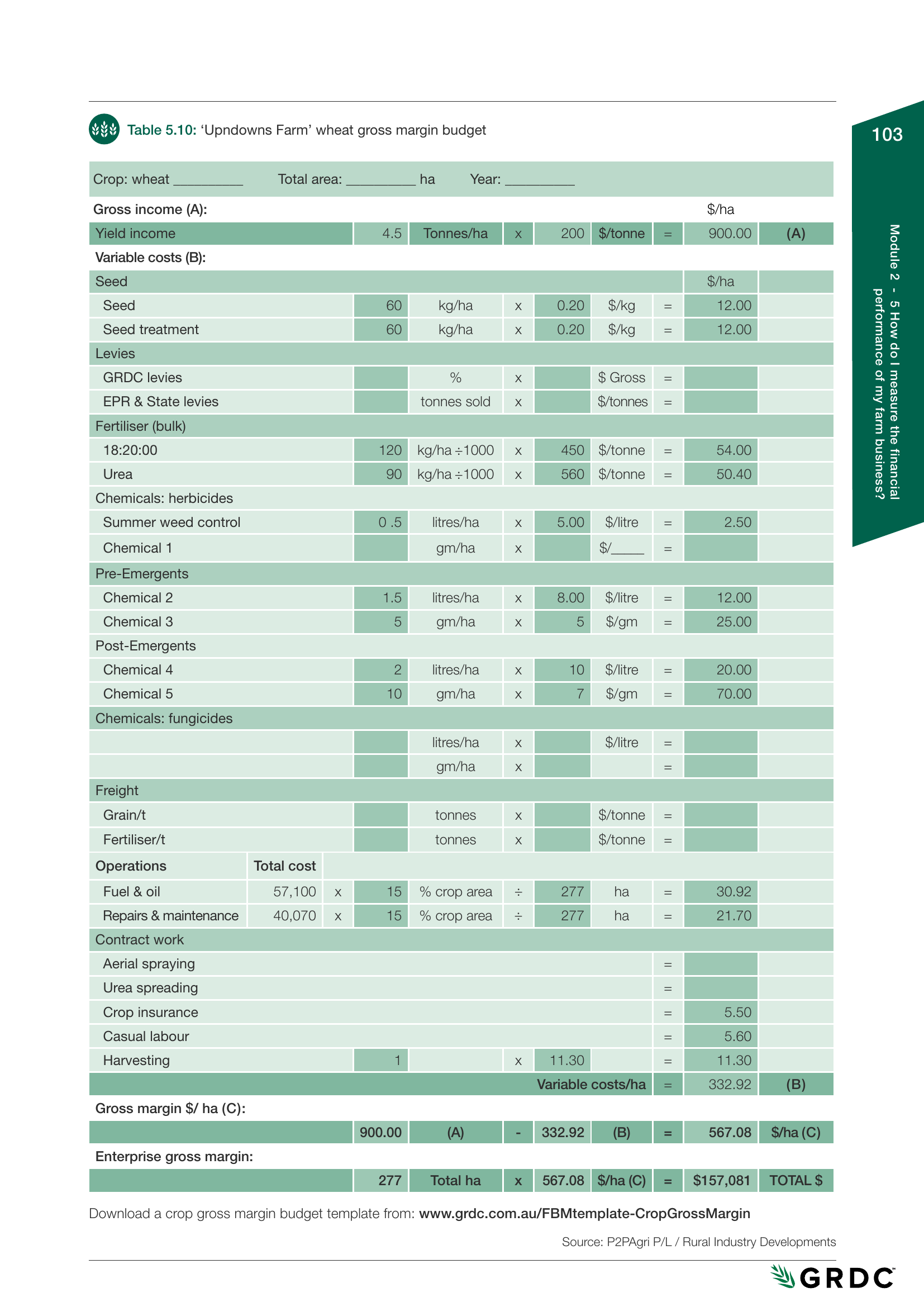
Analysis from the GRDC's Farming the Business manual—a comprehensive farm business management resource developed by P2PAgri's Mike Krause for the Grains Research and Development Corporation—shows that understanding your complete cost structure is essential for navigating periods of disruption. For the typical Australian grain operation, fuel and oil represent roughly 15–20% of total operating costs.
That means even a significant fuel price increase—say 40% above pre-crisis levels—translates to a 6–8% increase in total operating costs. That's meaningful, but it's not the catastrophic margin-destroyer that many fear. The bigger cost drivers for most broadacre operations are fertiliser (often 25–35% of variable costs), chemicals, seed, and increasingly, interest on debt.
This is not to minimise the crisis. For farmers who cannot access diesel at all, percentages are irrelevant —you simply cannot sow, spray, or harvest without fuel. The supply crisis is the real and immediate threat. But for those who can secure supply, understanding where fuel sits within the overall cost structure helps inform better decision-making rather than panic.
Where Fuel Really Ranks: The Sensitivity Analysis
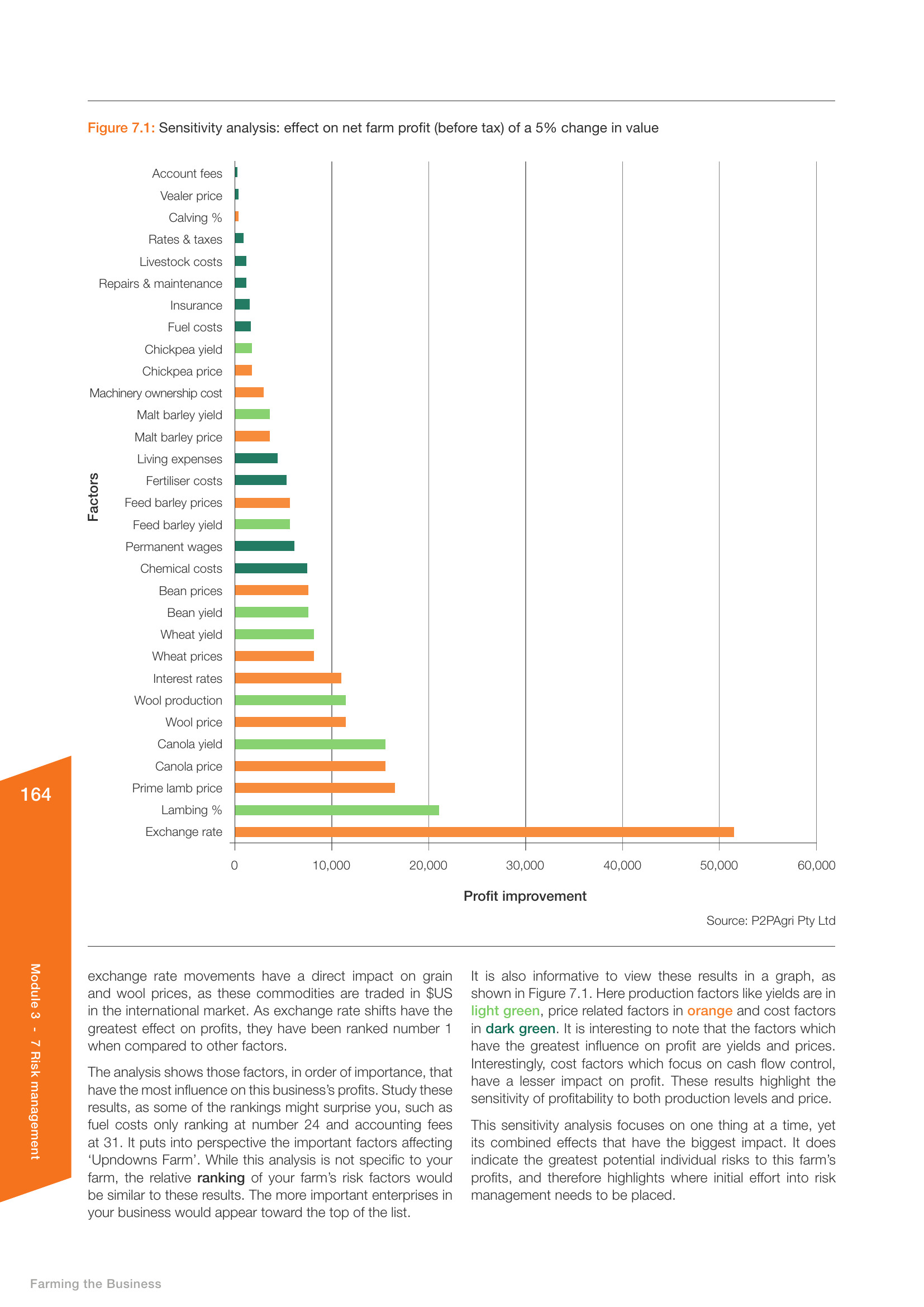
Perhaps the most powerful illustration of fuel's relative impact comes from the risk management module of Farming the Business. Figure 7.1 shows a sensitivity analysis—the effect on net farm profit of a 5% change in each cost and revenue factor. The results may surprise many farmers.
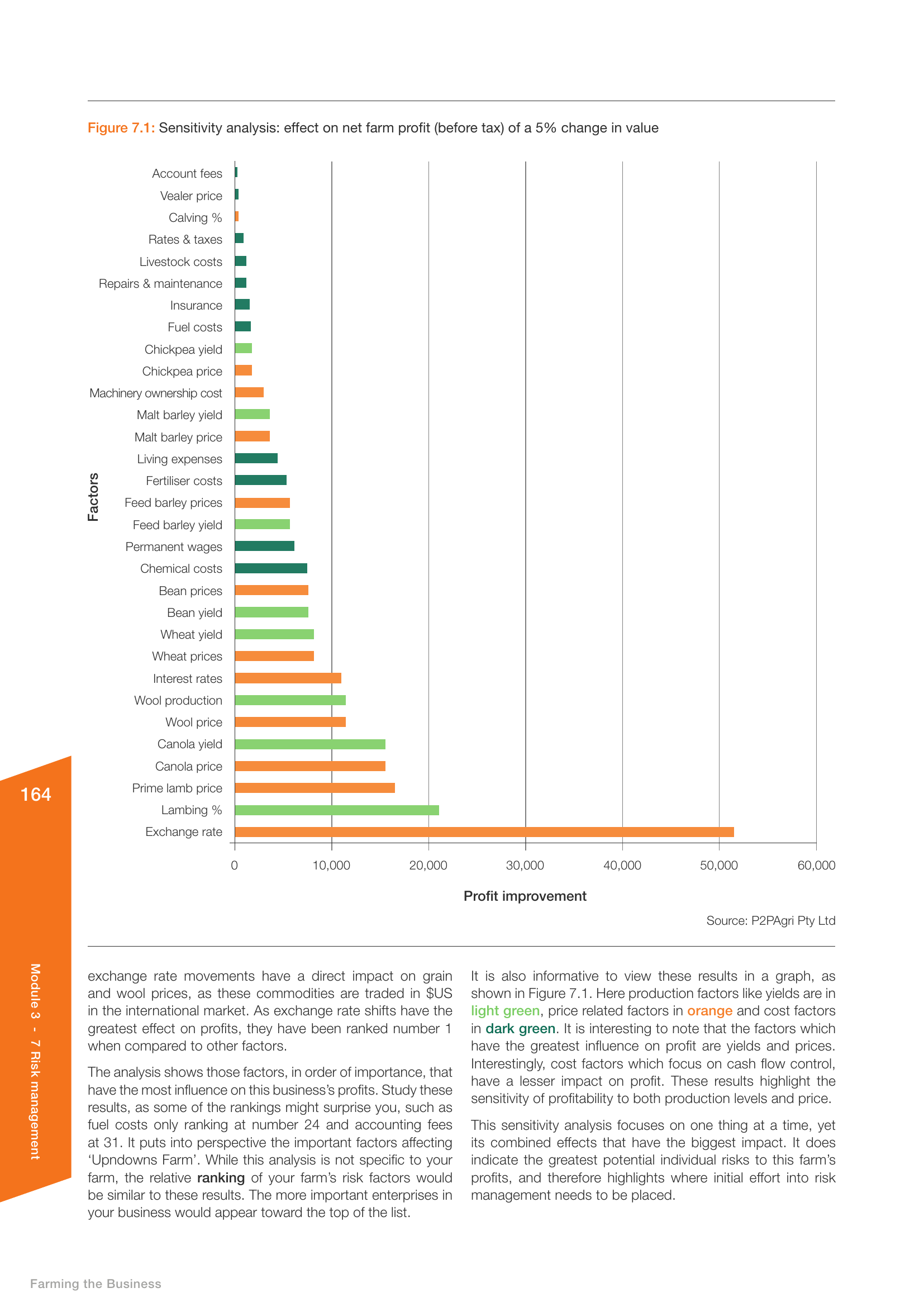
As the manual notes, the factors that have the greatest influence on profit are yields and prices. Cost factors—including fuel—have a lesser sensitivity on the bottom line. The text accompanying this analysis points out that fuel costs rank at number 24 out of 31 factors, with accounting fees at 31. This puts the fuel cost concern into proper perspective: it matters, but it's far from the most impactful variable in your business.
What the Numbers Actually Look Like: A Worked Example
Consider a typical 3,000-hectare grain operation in the NSW or SA wheat belt. Before the crisis, a reasonable operating cost structure might look something like this:
Fertiliser at $140–$180 per hectare represents the single largest variable cost, accounting for roughly 30% of total operating expenses. Chemicals and herbicides typically run $60–$90/ha. Fuel and oil on a per-hectare basis sits around $50–$70/ha for broadacre cropping, covering seeding, spraying, harvesting, and grain cartage. Seed adds $30–$50/ha, and then there are repairs and maintenance, insurance, labour, and interest costs on top. For the big machines, our breakdown of what a header really costs per hour shows how those ownership costs stack up.
At $1.75/L diesel (pre-crisis), a farm using 80,000 litres annually spends roughly $140,000 on fuel. At the current $2.25/L, that bill jumps to $180,000—an increase of $40,000, or about $13/ha.
If prices push toward $3.00/L as some analysts warn could happen if the strait remains closed, the annual fuel bill hits $240,000—an additional $100,000, or $33/ha compared to pre-crisis. That's a serious cost increase, but set against total operating costs of $400–$500/ha, it represents a 7–8% rise in total costs rather than the 70% increase in the fuel line item alone.
The point isn't that fuel cost increases don't matter. They absolutely do. But farmers who know their full cost of production can make rational decisions about how to respond, rather than making fear-driven choices that may cost more in the long run.
The Real Danger: Supply Disruption, Not Just Price
Australia's fuel security position has been a vulnerability for years, and this crisis has exposed it. As of early March 2026, Australia holds just 34 days of diesel reserves—a figure that has been classified as non-compliant with International Energy Agency standards since 2012.
For farmers in regional and remote areas, this thin reserve translates to real operational risk. The federal government has begun releasing strategic petrol reserves, but farmers primarily need diesel—and diesel is where the supply pinch is most acute. Regional demand has reportedly surged by up to 280% in some areas as farmers scramble to fill on-farm storage ahead of planting.
Western Australian farmers face particularly acute challenges. With the 2026 planting season following a record grain harvest in 2025, the capacity and desire to plant at scale is strong—but diesel availability threatens to constrain operations at the worst possible time.
The flow-on effects extend beyond fuel itself. Fertiliser supply, particularly urea, is also under pressure given that a significant share of global natural gas transits the same region. Farmers who haven't already locked in fertiliser orders may face both higher prices and delayed delivery.
Lessons from the Farming the Business Playbook
The GRDC's Farming the Business manual, available as a free download on the P2PAgri website, covers exactly these kinds of scenarios across its risk management and cost of production modules. Several principles from the manual are directly applicable to navigating this crisis:
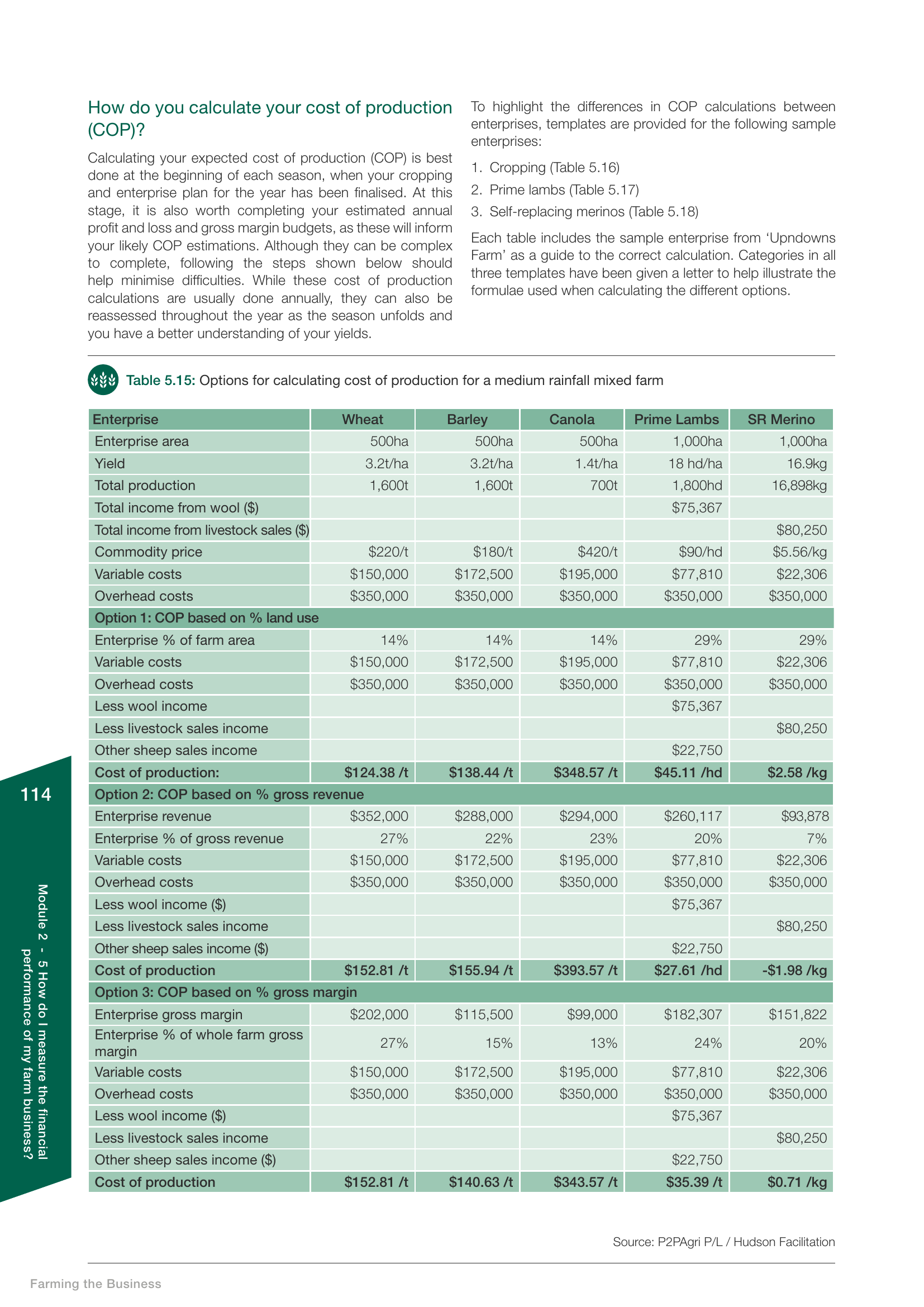
Know your cost of production by enterprise. As outlined in our detailed guide to cost of production analysis, understanding what it costs to produce each tonne of grain or each kilogram of meat is the foundation of sound business decisions. When fuel costs change dramatically, you need to quickly recalculate your breakeven and determine whether your marketing strategy still makes sense.
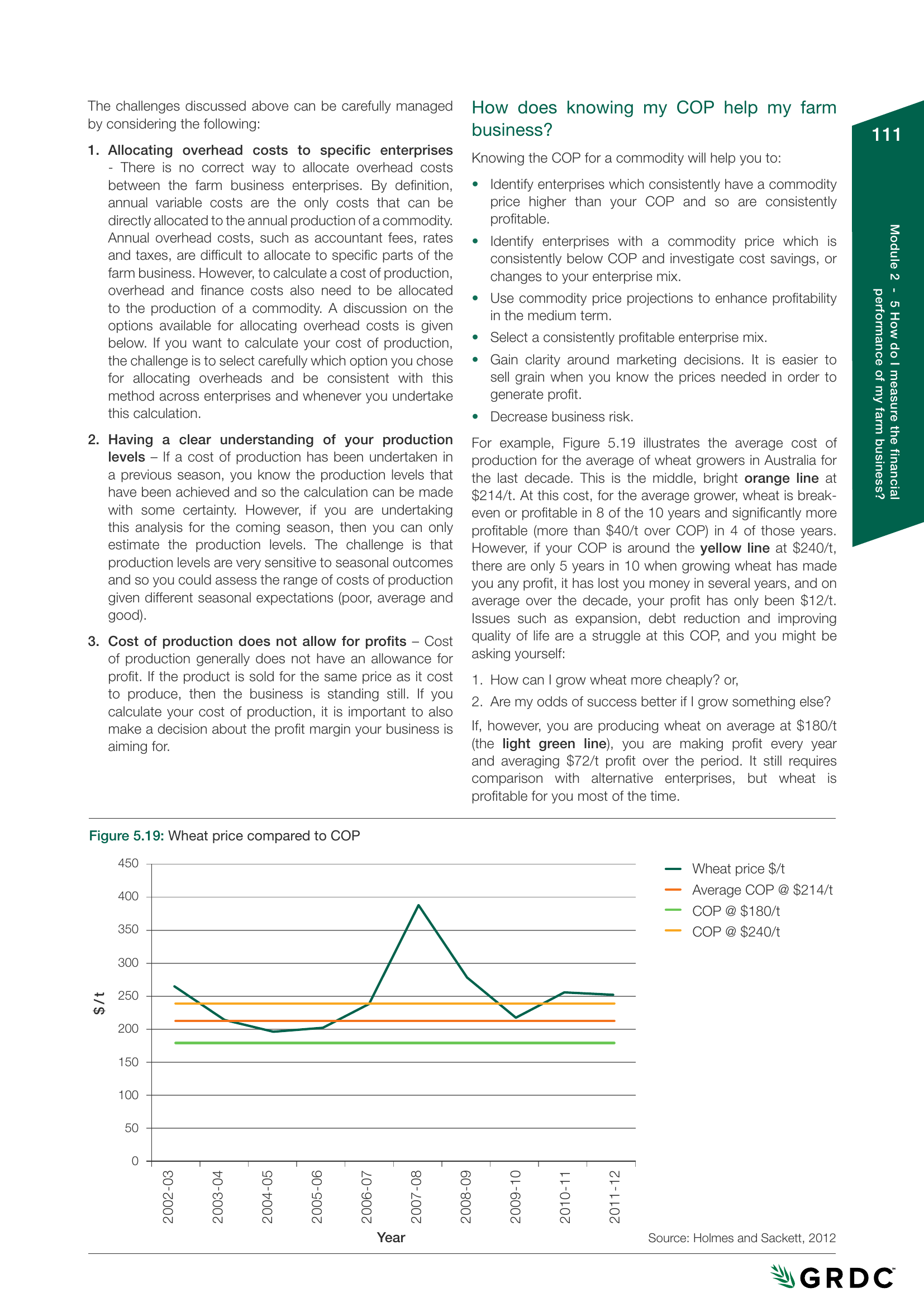
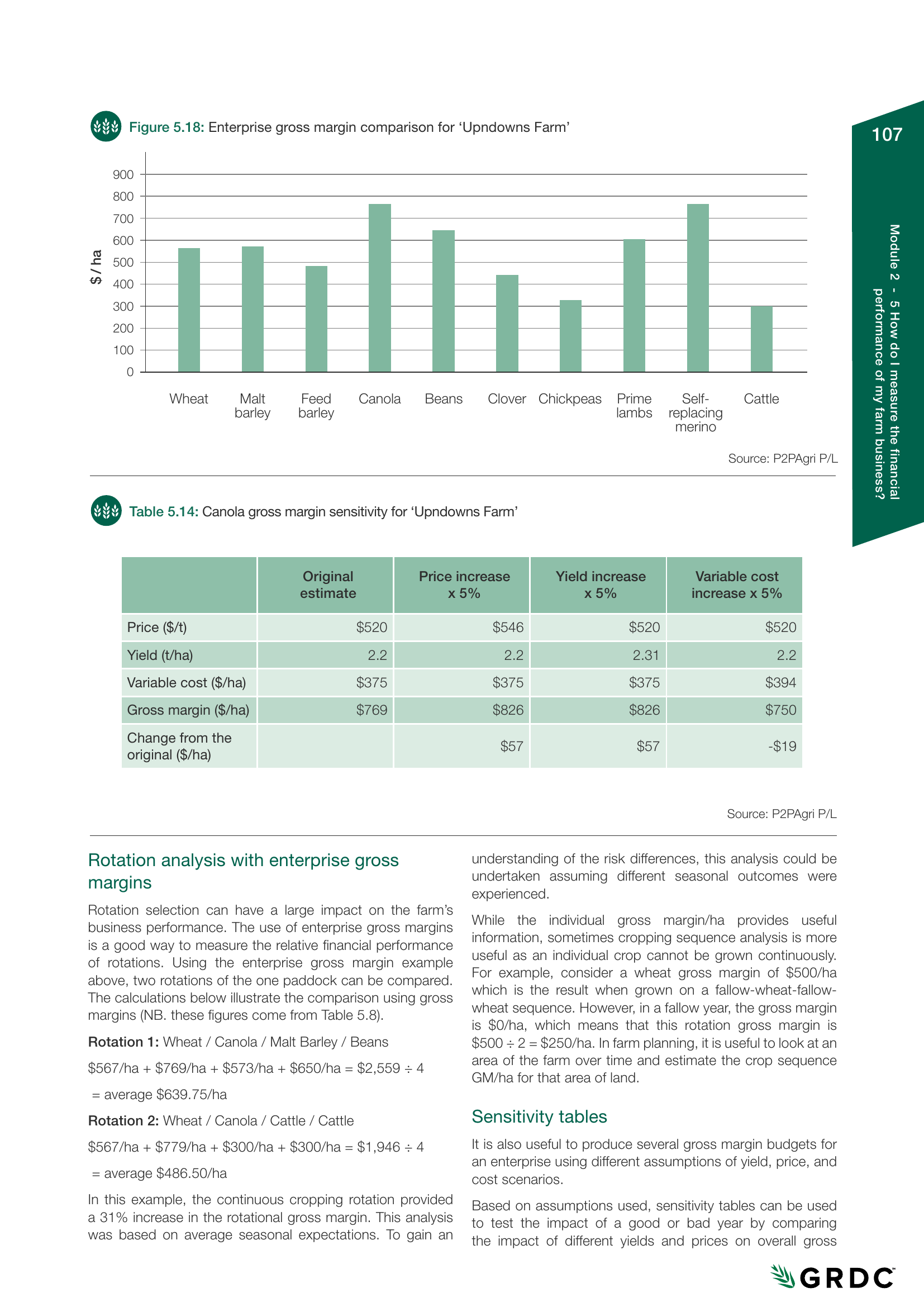
Use scenario analysis to plan for uncertainty. The manual emphasises the importance of “what-if” planning—exactly the kind of thinking this crisis demands. What if diesel hits $3.00/L? What if it stays above $2.50/L through to harvest? What if fertiliser deliveries are delayed by four weeks? Running these scenarios now, rather than reacting when they happen, puts you in a stronger position to make timely decisions. P2PAgri's scenario analysis tools let you model fuel cost increases and stress-test your farm budget under different price assumptions.
Separate what you can control from what you cannot. You cannot control geopolitics or global oil supply. You can control your planting program, your fuel efficiency, your marketing decisions, and your financial buffers. Focus your energy on the levers you can actually pull.
Practical Steps for Farmers Right Now
Secure your supply first, worry about price second. If you can access diesel—even at elevated prices—filling on-farm storage now is prudent. The risk of not being able to plant at all far outweighs the cost of paying $2.25/L instead of $1.75/L. On a 3,000 ha operation, the price increase costs roughly $40,000, but a missed planting window could cost $500,000 or more in lost production.
Recalculate your breakeven immediately. Update your cost of production figures with current fuel and fertiliser prices. This tells you the minimum commodity price you need to cover costs and helps inform forward selling decisions. If your wheat breakeven moves from $280/t to $310/t due to higher inputs, that changes your marketing strategy.
Review your planting program with fuel efficiency in mind. If fuel availability is constrained, consider whether precision farming practices such as controlled traffic farming, GPS guidance, and variable rate application can reduce total fuel consumption. Every litre saved is a litre you don't need to source.
Talk to your bank early. If higher input costs create cash flow pressure, proactive conversations with your lender are always better than reactive ones. Banks prefer to work with farmers who come to them with updated budgets showing they understand the situation and have a plan, rather than waiting until overdrafts are exhausted.
Don't ignore forward selling opportunities. With commodity markets volatile and input costs rising, locking in a portion of expected production at current prices provides certainty. This is especially important if your breakeven has risen—securing profitable sales now reduces your exposure to further price moves.
Check your insurance coverage. Review whether your policies cover crop losses resulting from inability to complete operations due to fuel shortages. While most standard policies won't cover this scenario, it's worth understanding your position.
The Bigger Picture: Building Resilient Farm Businesses
This crisis is a sharp reminder of why sound farm business management matters. The farmers who will navigate this period best are those who already had a clear understanding of their cost structure, maintained adequate financial buffers, and had contingency plans for supply disruptions.
The Farming the Business manual was written precisely for moments like this—to equip Australian farmers with the tools and frameworks to make good decisions under pressure. As the foreword states, successful farm management is about “profitability, better targeted inputs and management of risk.”
Whether this crisis resolves quickly or persists through the planting season, the fundamentals don't change: know your numbers, plan for multiple scenarios, act on what you can control, and seek professional advice when the stakes are high.
Model the Impact with P2PAgri
P2PAgri's farm business planning software is purpose-built for exactly this kind of analysis. You can model the impact of higher fuel costs on your cost of production, run scenario analysis across different price outcomes, and see in real-time how changes in input costs affect your bottom line.
Calculate your updated breakeven with current diesel prices. Compare planting programs at different fuel cost assumptions. Assess whether forward selling at today's commodity prices covers your revised costs. P2PAgri gives you the clarity to make confident decisions when the pressure is on.
Download the free Farming the Business manual for a comprehensive guide to cost of production, risk management, and scenario analysis. And start your free P2PAgri trial to put these principles into practice with powerful, easy-to-use farm business planning tools.
Keep reading
Managing Farm Input Costs When Everything Keeps Rising: A Practical Guide
Managing farm input costs as urea and diesel keep rising: where your money goes, how to calculate your break-even, and three ways farmers protect margins.
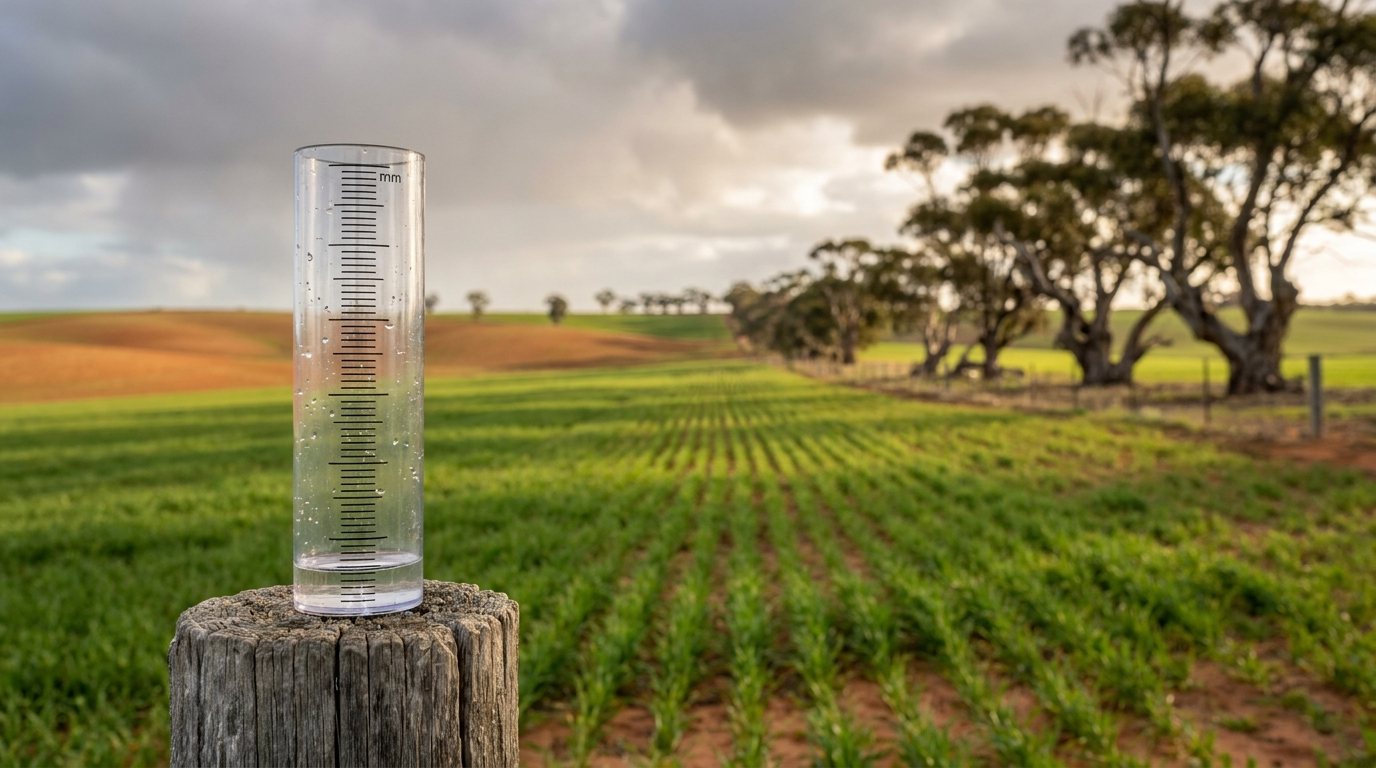
Rainfall Deciles Explained for Your Farm Budget
Rainfall deciles explained for farmers: what decile 1, 5 and 9 mean, how to rank your rainfall to date, and how to build dry, median and wet farm budgets.
Grain Marketing Plan: When to Sell, Store or Forward Sell in Australia
A grain marketing plan for Australian farms: when to sell, store or forward sell, a target price formula, the cost of storing grain and a one-page template.