
From Wheat Fields to AgTech: The Story Behind P2PAgri
Podcast transcript from Your Farm Business Podcast
It is one thing to build software for farmers. It is another to have spent a working lifetime learning, often the hard way, exactly what farmers need it to do. In this episode of Your Farm Business Podcast, host Tom Moir sits down with Mike Krause, agricultural economist, author and founder of P2PAgri, to trace the full story behind the platform.
From wheat-breeding glasshouses at Roseworthy Ag College to coding farm simulations in Fortran, from a government economist's desk to the front line of rural banking in the years when banks were taking the keys off Eyre Peninsula farms, Mike's career has circled one question: how do you help farmers become better business people? It is a conversation full of practical wisdom for any farmer thinking seriously about profitability, succession, expansion and long-term resilience.
From Wheat Fields to AgTech: The Story Behind P2PAgri
Tom Moir:
Welcome to Your Farm Business Podcast, brought to you by P2PAgri. My name is Tom Moir, and I'm interviewing Mike Krause, the CEO and founder of P2PAgri. Mike joins me now. G'day, Mike.
Mike Krause:
G'day, Tom. How are you going?
Tom Moir:
I'm very well, mate. It's good to be speaking to you, and good to finally sit down and have this chat to learn about P2PAgri, your own background, and how it all came about. So to begin with, Mike, could you explain what P2PAgri is, in the agricultural sense?
Mike Krause:
P2PAgri, Tom, was set up to help farmers with their financial decision making. First of all, to work out what their profitability is and where their financial strengths are, and then, as a modelling tool, to plan how we might improve that going forward. So it's both software, but we also do training in this space. We train farmers one-on-one or in groups, currently doing it all online, and working with organisations like Tocal Ag College in New South Wales.
Tom Moir:
Amazing. And how long has that been going on for?
Mike Krause:
We've had four years of working with Tocal, and we're just moving into our next two-year contract. It's interesting there, Tom. We were approached in COVID times, when we would traditionally run these workshops in the CWA hall in the local town, and we were told, no, you've got to do it all online. So we've perfected it to the stage now that farmers who do our courses don't want to go back to the old way. They're happy to sit back in their own office and do the course, improve their financial literacy, and at the same time better understand their farm business performance.
Tom Moir:
Fantastic. And so, Mike, before we go further, in another episode we'll go more into P2PAgri itself, how it works and how it came about. But let's start with you and your own background. Have you always been involved in agriculture, or is that something you came into later in life? What's the Mike Krause background story?
Mike Krause:
I grew up at an agricultural college in South Australia called Roseworthy Ag College. My father was a wheat breeder, so he bred different varieties of wheat. Halberd was an old variety, grown quite widely in South Australia and also in parts of WA in the low-rainfall areas. I found myself in glasshouses crossing varieties of wheat at the primary school age of grade seven. So that's where my interest in agriculture started.
Tom Moir:
Wow. Very early days, then.
Mike Krause:
Very early days. My father came from a farm in the Murray Plains, so he came from a farming background, but he was very gifted and talented in scientific areas. So he was breeding wheat, and that's where I was first introduced to agriculture.
Tom Moir:
Okay. So what happened from a work point of view after you finished school? Did you head straight into agriculture?
Mike Krause:
Look, I struggled through primary school and struggled through high school, and I got to year 12. I thought, if I followed my father's footsteps into ag science, then I'd have to do really well in physics and chemistry, and I managed to bomb them. But I quite enjoyed economics, and I thought, what if I blended economics and agriculture together? So I went off and did an agricultural economics degree at the University of New England in New South Wales, and I really enjoyed farm business management and statistics. Statistics is about regression analysis and analysing big buckets of data, and I quite enjoyed that. When I finished university, computers were coming out of buildings the size of banks to suddenly sitting on desks, and I thought, that's my future. So I did a bit of research and went on to do a master's in New Zealand, at Lincoln University in Christchurch, looking at computer simulation and how we can model farming systems to find better solutions. So from an early stage, computers were of interest to me, as well as farm businesses.
Tom Moir:
And moving over to New Zealand for that study, was that because it was the only training around where you could fulfil that need, or did that course stand out to you in particular?
Mike Krause:
Good question, Tom. I did a bit of due diligence. Armidale, UNE, was probably one of the better courses for agricultural economics at the time, so I felt it was probably better if I got influenced by other lecturers and other institutions. I did quite a lot of research and found that Lincoln Uni at the time was the best place to understand simulation. If you think about it, simulation has really come about because pilots get put into simulators to work out their skills in pilot training. We were doing the same thing, but more in agricultural systems, understanding what things we knew and what things we didn't know. I was even learning an ancient coding language called Fortran to do that. So I understand a little bit of coding, even though I don't do a lot of it today.
Tom Moir:
Wow. And what was the work pathway out of that study? Was there a clear sense of where you fit into the agricultural technology niche, or did you have to carve a bit of a path?
Mike Krause:
I was really fortunate, Tom. I did my undergraduate degree as a cadet for the South Australian Department of Agriculture, and they also helped me do my master's degree. In reward for that, I was bonded for about five years. So my pathway was really in government for the first nine years of my career. I was working in head office, in the Minister of Agriculture's office, as a liaison officer, and that gave me the experience to know I didn't want to get into politics, but I did want to be active in understanding farmers. So I went as an agricultural economist and worked in the Riverland in South Australia, which gave me exposure to grape growers, citrus growers, wheat growers and sheep people. I wanted to knock my theories into practice with farmers. I spent about four years up there, really enjoying it. Farmers used to stir the hell out of me for being a university graduate who didn't know what he was talking about. So that's really where I blooded my practical knowledge.
Tom Moir:
There's no better place to cut your teeth than going out to a farm and being humbled by what you know and what you don't know.
Mike Krause:
Exactly. I found out that what I knew was a lot less than I thought I knew.
Tom Moir:
And where did the journey take you after that?
Mike Krause:
When I came back to Australia, spreadsheets had been invented. Back then it was Multimate, but then it became Excel. I used to do a lot of modelling in Excel, helping farmers, or looking at research projects where the researcher would say, well, if the farmer adopted this on his farm, how much would it improve his efficiency and profitability? Then I found my creativity in the public service was a bit restricted, so I decided to join a bank. As an agricultural economist, I was talking to farmers probably twice a week about commodity price forecasts and what influences farming businesses.
Mike Krause:
I was with the bank for about four years, and that was a really interesting time. The bank had had a run of poor years on Eyre Peninsula, and the banks were actually taking the keys off farmers, which was a really bad environment. They used to think, Mike, you can talk to farmers in public, we'll wheel you out to talk to farmers in this difficult situation and see if we can find a way forward. So that was a difficult time, but it really got me understanding how banks view lending to farmers through the good times and the bad times, and that was fascinating to me. It came to an end when the bank went belly up and lost a lot of money itself. So after taking the keys off farmers, the government took the keys off the managers there, and my career in banking finished. They said, you can leave Monday or Monday, Mike, which one would you like? So I joined an ag consulting firm that consulted on ag insurance to Lloyd's of London, and I learnt about insurance. Then, four years later, I started my own consulting practice, advising farmers on farm business management issues like profitability and succession planning. Do I buy the next-door neighbour out? What can I pay for it? And if I have two years of drought, will the banks still love me? Those are the sorts of questions I helped with.
Tom Moir:
Wow. So you've had quite a vast cross-section of industries that you've worked in. You've touched on very different areas, and also both sides of the coin: it's not just the farmer's perspective, it's also the accountancy and finance side. So what was motivating you through all of this, Mike? Was it the passion for the statistics and numbers, or for agriculture itself, or just the need to make systems run better?
Mike Krause:
What was motivating me, way back, even when I was at university, was that I witnessed quite a gap between good farm business management understanding and what farmers actually did. Back in those days we had the wheat board that regulated the wheat industry, and other bodies regulating wool and other commodities, so everything was quite controlled by institutions and governments. Then suddenly we came out of that, we had a free market, and there was a lot more risk involved in agriculture. I could see that the modelling I'd done, looking at the what-ifs and the variations, was a way forward to really help farmers more completely understand the farming business system they're in, and therefore make better decisions to continue to grow their businesses. Not just for themselves: as you would know, Tom, a lot of farmers are focused on passing the farm on to the next generation as better environmental managers and better business people. So it was really about helping farmers with their long-term strategic plans.
Tom Moir:
Again, utilising skills from all those different industries you'd had exposure to. It's always funny how the things you go and do, study and learn, you don't know how they're going to apply later down the track. You must have run into that a few times.
Mike Krause:
Yes, a lot of times. In fact, one of them was quite interesting. I ran a workshop called Risky Business. Those of you listening would have played Monopoly or Squatter, and if you're playing those games, you understand that Tom's level of risk taking is different to Mike's level of risk taking, but we're playing the game together to see who the winner is. Risky Business was developed by Dr Amira Badi out of WA Uni, and I ran it for a number of different organisations, like banks, universities and farmer groups.
Mike Krause:
When I'd run it, the game would give you a farm for the day, and you'd play five seasons with that farm. Everyone gets given the same farm, and you're given partial knowledge, like farmers have. You don't know what season you're going into. Do you know what commodity prices you're going to experience this season? No. But we know the range, and we know what our productivity levels were. So participants would decide what enterprises they were going to run, what input levels they would put in, and what forward pricing they might do. Then suddenly the season is thrust upon them, and, oh no, it was a drought. So how did we go? The computers would do all the calculations, and they'd know that Tom handled that season much better than Mike. Right, let's play the next season and see if we can learn from him. And at the end of those workshops, the farmers wouldn't give my laptops back. I'd ask why, and back in those days they were pretty expensive. They said, we want to take these computers home and put our own numbers in them. And I thought, okay, farmers get modelling, they get the what-if type stuff. So that was one of the reasons we wanted to create P2PAgri: to help farmers understand their businesses better and do that what-if analysis.
Tom Moir:
So the idea to actually develop that software came much later in your journey of studying, learning and working in all those different environments.
Mike Krause:
Look, I don't want to age myself, Tom, but that probably started about 20 years ago, when I was still predominantly consulting to farmers. So I started investing in software prior to the cloud being popular. It was living in Visual Basic and Excel, where farmers could put their data in. What made it a challenge for us is that in the game it was a mixed farm at Merredin, in WA, so we knew what the yield variations, prices and costs were. But our software today allows any farmer in Australia to use it. It doesn't have to be a Merredin-based farmer. It was also aimed at being simple enough for farmers to put their own data in, not depending on a consultant or an accountant or an adviser to do it on their behalf.
Tom Moir:
So it's a great tool to help streamline that process and bring it all together, which would help with benchmarking and number crunching. So along that pathway, what have been some milestones for you? The development of the software would be one, but there are always those build-up milestones that get you to where you are. What are some standout moments?
Mike Krause:
There are a number of standout moments, and a lot of them come from working with farmers. I got out of university with this farm business management background, and this computer modelling and planning background. But does it really work in reality? That's what I learned out of the books, and yes, that's what we studied, but does it work? One of my first clients was a citrus grower in the Riverland of South Australia, and he was just taking over the farm from his dad. He had a number of plantings that were mature, and some that weren't quite as mature. If you know citrus, it takes about six years before it starts to come into production, and about ten years to get to full production. So it's a really long-term business model.
Mike Krause:
And he said, in a really dry, drawling Australian way, you'd better not stuff this up, Mike. So I sat back, did a lot of my Excel modelling, and I said, no, I think you'll be fine. This is where the financial performance of your business is today, this is where I think you'll be in five years' time, and you're going in the right direction. Our conversation finished after I did that job. I didn't go back yearly to check whether my theory was working, Tom. But seven years later our paths crossed again, and he said, Mike, you never know. And I'm thinking, okay, he's going to call a spade a shovel. But he said, Mike, it worked to a T. All your predictions came right, and it's exactly where we ended up five years later. And I thought, whoa, okay, this modelling does work. There's credibility in it. We can use it and depend on it. So that was a bit of an aha moment.
Mike Krause:
Another one was a farmer who came to me and said, Mike, I'm going to buy the next-door neighbour out, it's come up for sale, and, as most farmers say, I'm going to buy it come hell or high water. But what I want to know is, if I buy it and I have two years of drought, will the bank still love me? And I thought, okay, that's a bit of responsibility. So I went away and worked out, with my Excel spreadsheet, the effects of drought and the high price he was paying at the time. Again, I didn't see him until about five or six years down the track. Our paths crossed at Sydney Airport, he was flying out and I was flying in. And he said, Mike, guess what? That modelling you did, I went and bought the land for the high price, and we did have two years of drought, but I didn't lose one night of sleep, because I knew I was going to pull through. And that's exactly what happened. I thought, okay, that's more evidence that this modelling really does work. If we turn it around and use it as a proactive tool rather than a reactive tool, we can start to make some really good business decisions.
Mike Krause:
I had another example where a farmer came to me and said, Mike, there's an auction next week next door, there are two parcels of land, and I want to go for one of them. And I said, okay, let's do the modelling. He did the modelling with me, and then he said, what happens if we bought two? So I put two parcels in there, and he said, oh, that might work. So he went to the auction and bought both parcels of land, and he's still a very successful farmer in his own right in his district. That was an example of me saying, we could use this modelling to help us understand the capability of our business better, and therefore take more risks, rather than doing the back-of-the-envelope sums or just inventing the numbers in my head. So those examples of farmers working with me gave me a strong belief that what I'd learnt at university, and then developed in software, was an effective way for farmers to grow their businesses.
Tom Moir:
That's amazing, and it would be so rewarding to see the proof in the pudding. Sometimes that took years to come about. It's not something you can test overnight. And two droughts in a row, that's pretty unlucky, and to be in that position would be a very high-risk, anxiety-driven scenario for almost anyone. So, really interesting.
Mike Krause:
You're right, Tom. It reaffirms that your faith and belief were real. So that was one of the milestones. Another was when GRDC approached me to write a manual on farm business management, which ended up being called Farming the Business. Farmers can get access to it now for the cost of postage, which I think is ten dollars. It was published about ten years ago and it's gone to its seventh reprinting, so it's been popular with Australian farmers. That was interesting for me, because you write a book and it's a bit like having a baby and presenting it to your parents for the first time, wondering whether they'll love it. When you produce a book, you think, will the industry love it, or will they just can it? So that was another pivotal moment, because I get farmers who don't really know me, but know the book, saying this book is now the bible for farm business management. So that's been another milestone: all that learning I did back then, putting that knowledge back into the industry, is going to be a good legacy.
Tom Moir:
Up to a seventh reprint, that speaks volumes. And the fact that it can be cross-applied across different industries around Australia. Even your background, you've got that citrus and horticulture-based farming, and then also Merredin, where you're not growing grapes, you're doing it a bit bigger out there. So the GRDC manual would have called upon many different aspects of your learning.
Mike Krause:
It did, and that was actually a team effort. I had a good team around me to do it. If anyone has an iPad, you can download it for free off iTunes, and it has over 50 embedded training videos. So it was quite innovative for the time, ten years ago when we put it together. Ten years ago we all thought ebooks might take over the world and nobody would pick up an old-fashioned book anymore.
Tom Moir:
Yes.
Mike Krause:
Well, I think 80% of the demand for this book is still the old-fashioned, I want to hold it in my hand, I want to put dog-ears in it, I want to scribble on it. So that was another pivotal point. And I had a good team together, so we wrote the book simply. A bit of my background, Tom: I'm actually dyslexic. Back when I was going through primary school and high school, that was always deemed to be a disability I had to overcome, rather than a gift. But it's helped me think about complex situations a lot more simply, and then present them simply. So that's been really useful in the computer modelling sphere, as well as in putting that book together. It was written relatively clearly and simply. My wife is a wonderful editor, so she edited it and solved the grammatical issues I have as a dyslexic.
Tom Moir:
There you go. That's quite an achievement. And it's really good that you've brought that mentality to your projects as well: this is something we can do, this is something we can simplify, this is something we can break ground with. Hats off to you for coming at it from that angle, Mike, because a lot of people would turn around at that point and say it's a bit hard. But here we are.
Mike Krause:
Here we are. Just determination to see if we can put these things simply, because agriculture is not a simple business, and it's not an easy business. There are so many permutations, so many things that can happen. But it's a rewarding business. And without agriculture, none of us are eating, none of us are clothed. So it's an essential industry, and if we can help farmers in that essential industry, then that's fantastic.
Tom Moir:
And looking back across all of that, Mike, what would your advice be to a 20-year-old Mike? We're not asking how old you are now, we're avoiding that particular hot-button question, but if you had to go back and give 20-year-old Mike a bit of advice, what would that look like?
Mike Krause:
That's a really interesting one, Tom, because all the institutions that educated me and gave me a good grounding in agriculture don't really exist anymore. The farm business management degrees that are out there, I think you can count on one hand the institutions that provide them now. They used to have a lot of TAFEs and ag colleges back then, training farmers in this space and teaching the basics of good farm business management. I was really fortunate: I had a vision of where I wanted my career to go early on, and I just followed that vision. Even helping farmers with their financial planning, I could do that in government, in banking, in insurance, or as a consultant. So my domain stayed the same, my aim stayed the same, I just did it in different ways with different organisations. So I'd say to myself back in my early career: keep doing what you're doing, and be inquisitive. A lot of technologies will come across your desk. Use the good bits of them, don't use the bad bits, and just keep looking at ways to improve your efficiency and effectiveness in achieving what you've set out to do. For me, it was always about helping farmers become better business people.
Tom Moir:
Fantastic. And in the current environment, we're recording this at the beginning of 2026. A lot has happened, with a lot of very fast developments in technology over the last couple of years. People in agriculture are picking that up at different speeds. We still see people doing agriculture in a traditional way, and we see other people jumping on board with technology really quickly. So just before we wrap up, Mike, what's your current take, early 2026? What are your predictions for how the farming industry is operating at the moment, especially in regard to benchmarking and keeping all those numbers together?
Mike Krause:
That's a really good question, Tom, and there are a number of facets to it. We're seeing technology come at us quicker than we can blink at times. For me, the advent of AI presented itself 18 months ago. I'm involved in developing software, and I was thinking, is that going to run us over? Do I have to be fearful of this big wave that's about to crash down on me? It took me about four or five months to get over that stress. Then I changed my mind. Rather than viewing AI as a wave coming at you, our role now is to surf that wave. We're going to jump on our surfboard, paddle like anything, stay on that wave, and see what it can do for us. At P2PAgri, we're actually using AI in about five different ways in our platform. In fact, our coding efficiency has probably increased about fivefold because of it, so we can do a lot more now.
Mike Krause:
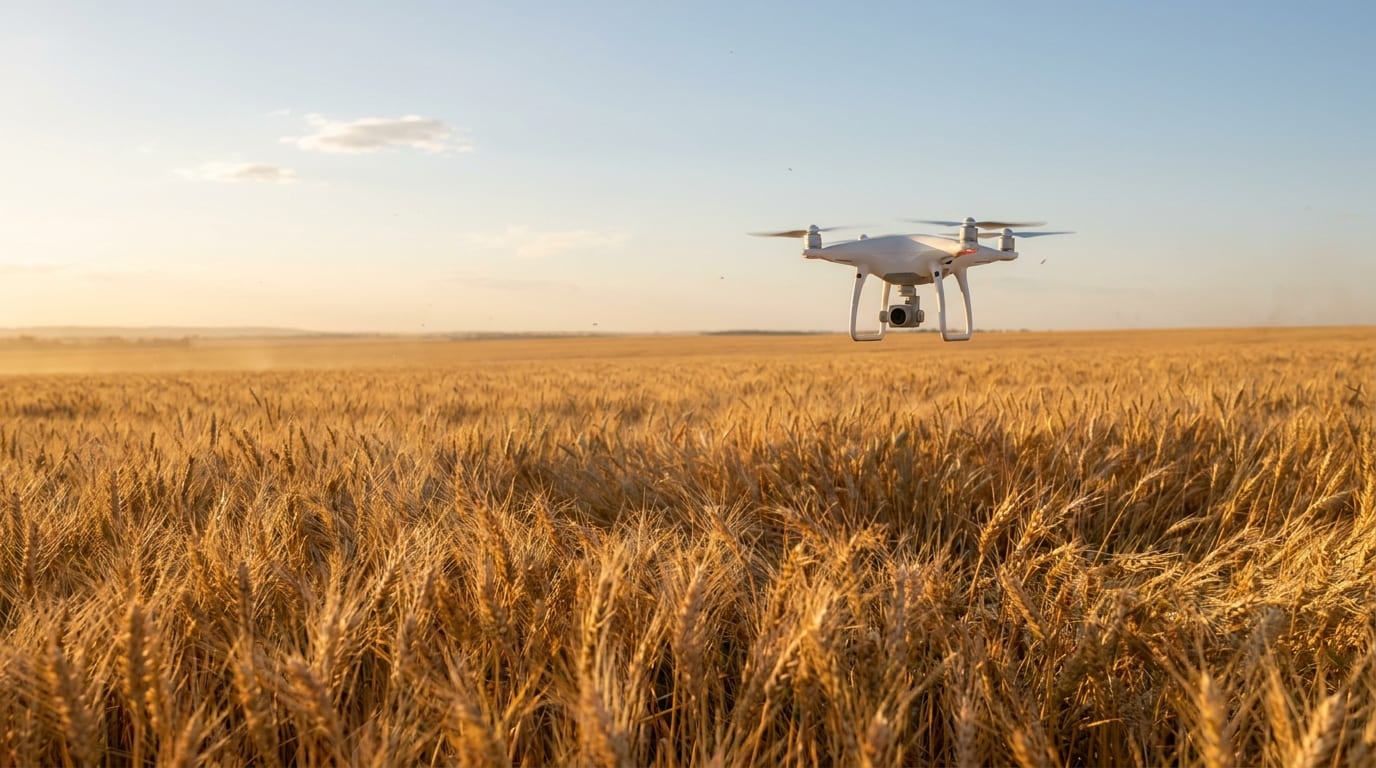
And I reckon that analogy is very similar to agriculture. We've got robotics coming to us, we've got drones coming to us, we've got satellite imagery coming to us, and we've even got virtual fencing being developed, so livestock are being more contained. There are a lot of technologies coming our way, and I think we've just got to be very clear in our own minds, as business people, about what our mission is and where we're heading, and then work out which technologies are going to be most effective in helping us achieve that.
Mike Krause:
Tom, you mentioned that interesting word, benchmarking. When I went to university, they said benchmarking was about as useful as reading the tea leaves in your cup of tea. And I thought, okay, that's interesting, I'd better put it to the test. About 30 years ago, I had about 200 dryland farmers in South Australia whose data we collected to look at benchmarking. So, how is Tom going against Mike, and all those sorts of things? We collected the data, and you could divide one number by another and work out whether Tom was more efficient than Mike.
Mike Krause:
But benchmarks are really good at helping you understand what questions you should research further in your farm business. Rarely do they give you the answers as to how. So you've got to unwind it. For me, the most important thing is that we set our own benchmarks for ourselves. If Tom wants to improve his 100-metre running, he runs it, he clocks it, then he puts himself through a training program and runs it again and benchmarks himself. He doesn't want to benchmark himself against Mike, who would take five times as long to run a hundred metres, if he made it at all. So benchmarks are really good if they're applied effectively to your own performance. But what I've learned in my career is that it's really the modelling forward of your profitability, your balance sheet and your cash flows that will help you answer those questions: if I want this benchmark to move from here to here, how do I go about doing that? So that's what pointed me back to computer modelling rather than benchmarking, which I know is very popular in different parts of Australian agriculture. I think you've got to put an intelligent hat on when you're benchmarking, to know how best to use it, and not to get disheartened, thinking, I'm always worse than Tom every year, so I'm going to give up.
Mike Krause:
So I think the future of agriculture is amazing. We've got challenges, like increasing land values, and that has its issues if farmers are looking to expand their businesses. But again, if we use the modelling approach and the what-ifs, that will help us make those wise decisions. So I'm excited for the future in agriculture. There's a lot of technology that's going to help us improve our efficiencies and the way we produce our fibre and food for our market and for international markets.
Tom Moir:
Very good. All right, Mike, I think we'll leave it there for this episode. But thank you so much. It's great to get an insight into your background, your training, and all of those achievements along the way to creating what P2PAgri is today. Look forward to chatting again sometime soon. Thank you very much.
Mike Krause:
Thanks, Tom. Thank you very much. See you.